
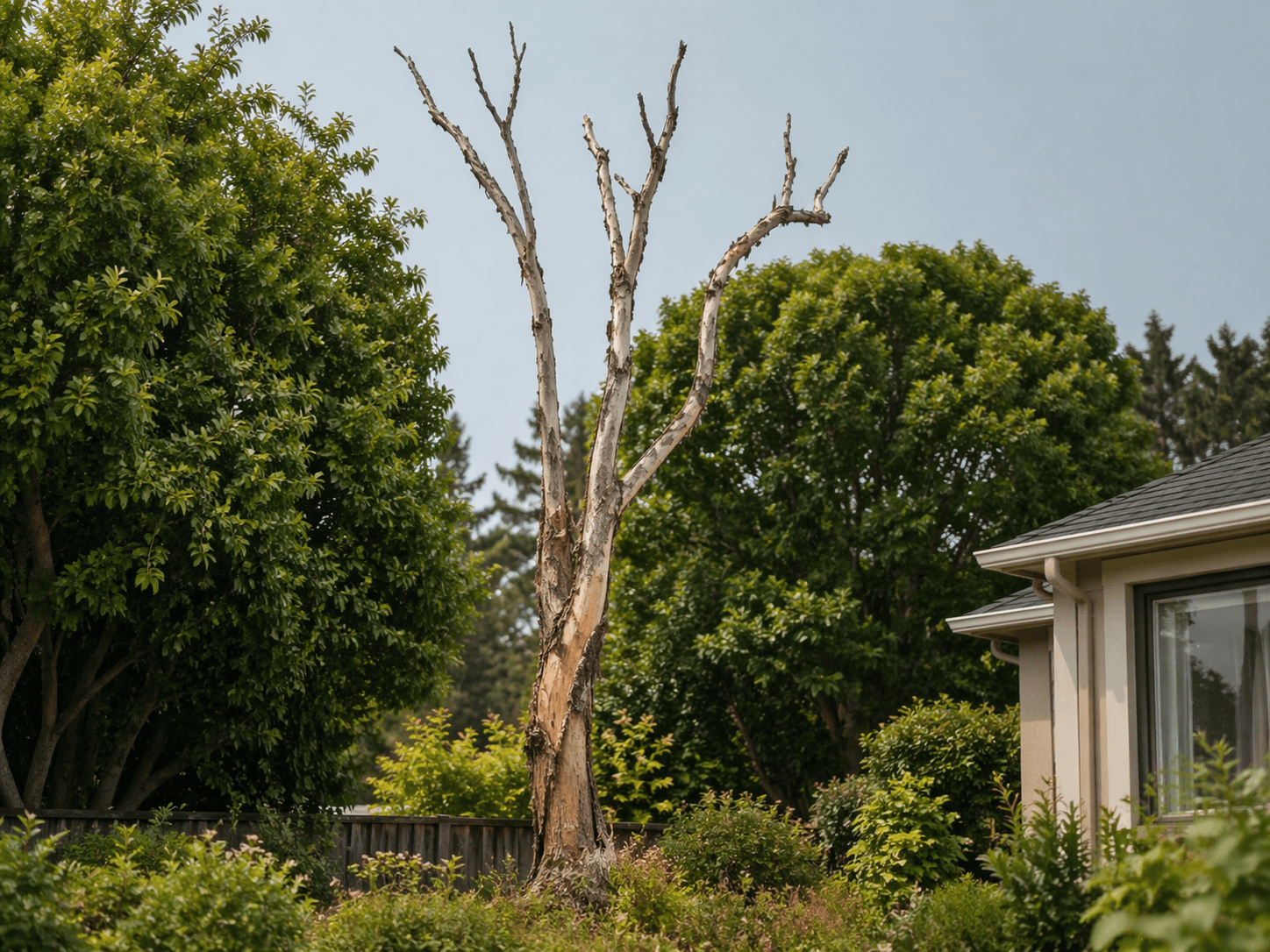
Dead Tree Removal: Do I Need a Permit in San Mateo County?
Removing a dead tree from your property sounds straightforward, but in San Mateo County tree removal is often regulated – even when the tree is clearly dead. Whether you are dealing with fire risk, storm damage, or routine yard cleanup, understanding when a permit is required can save you fines, delays, and the hassle of redoing paperwork after the fact.
This guide explains when permits are needed in San Mateo County, how emergency and hazardous situations are handled, what the rules look like in specific cities like Redwood City and Daly City, and how to stay compliant without slowing down a safety-critical removal. For urgent situations, 24/7 emergency tree removal from a licensed local crew is the safest path. Precision Tree Care Inc has served San Mateo County since 2005 under California Contractors License #907593 and ISA Certified Arborist #WE-12520A.
Do I need a permit to remove a dead tree on my property?
The answer depends on three things: the tree’s size, its species, and its location on the property. In general, you may need a permit if:
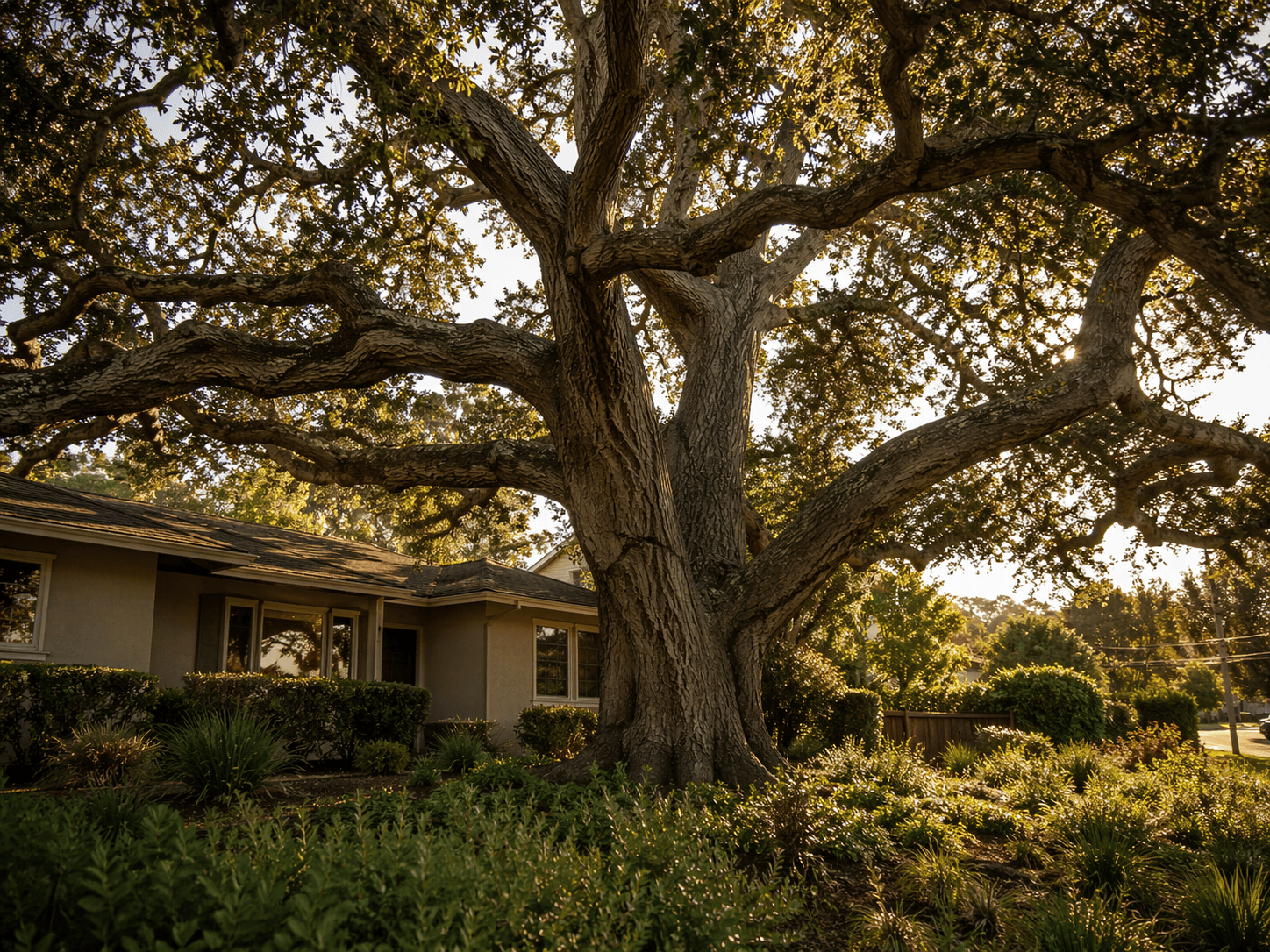
- The tree is classified as a protected or heritage species (native oaks are the most common trigger in San Mateo County).
- The trunk diameter measured at standard height exceeds the local threshold – typically 10 to 15 inches, varying by city.
- The tree is in a regulated zone, such as a hillside overlay, coastal setback, or near a public right of way.
- The removal is not considered urgent – routine removals almost always need paperwork even when the tree is dead.
Dead trees and genuinely hazardous trees may qualify for expedited or retroactive permits, but very few cities in the county allow removal with zero documentation. The safest approach is to confirm local rules before any cutting begins.
What counts as “hazardous” or “emergency” removal?
Urgency matters because most San Mateo County ordinances carve out an exception for trees that pose an immediate, documented threat. A tree may qualify as an emergency or imminent hazard if:
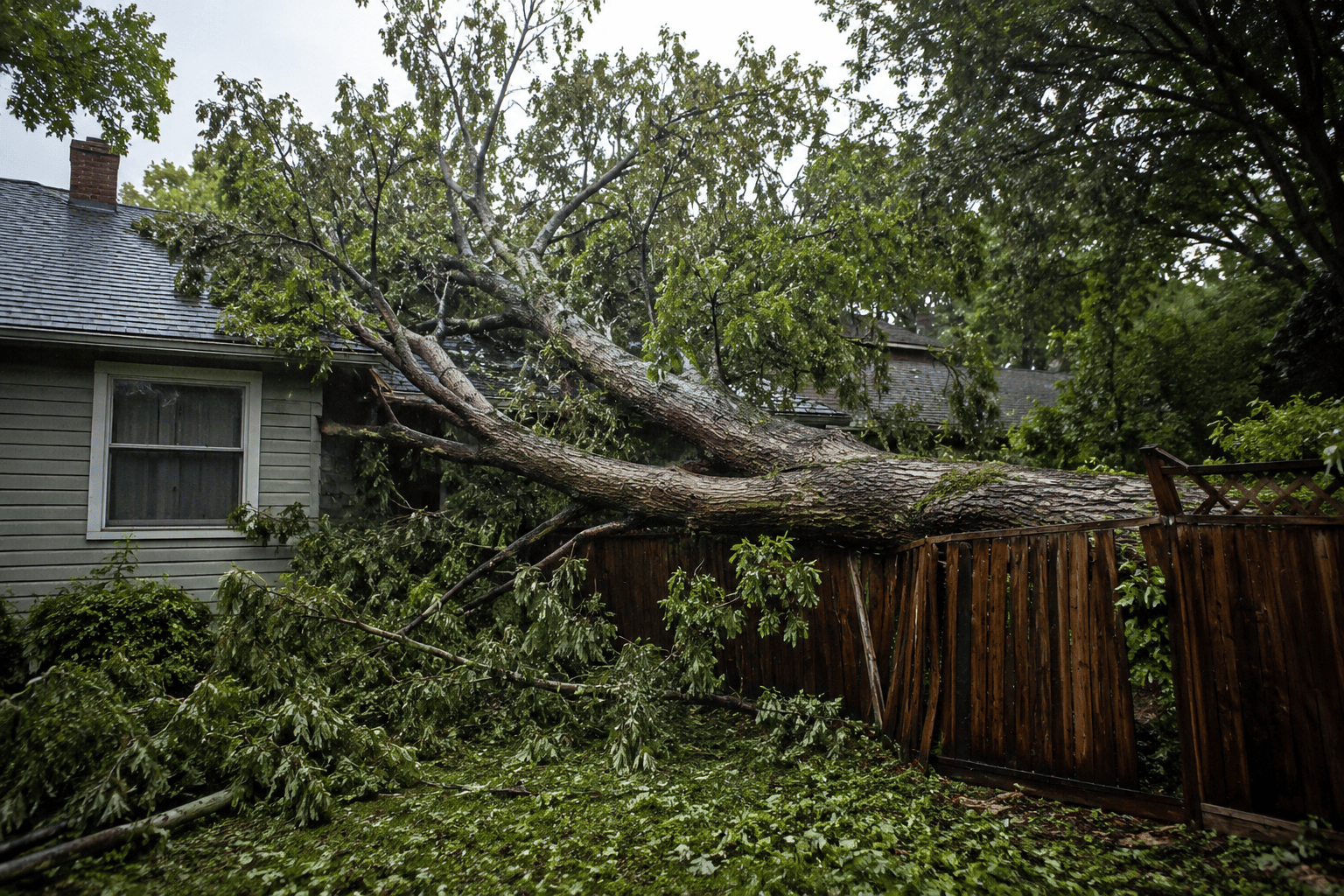
- It has already fallen or is actively collapsing
- It is leaning sharply toward a house, garage, or other structure
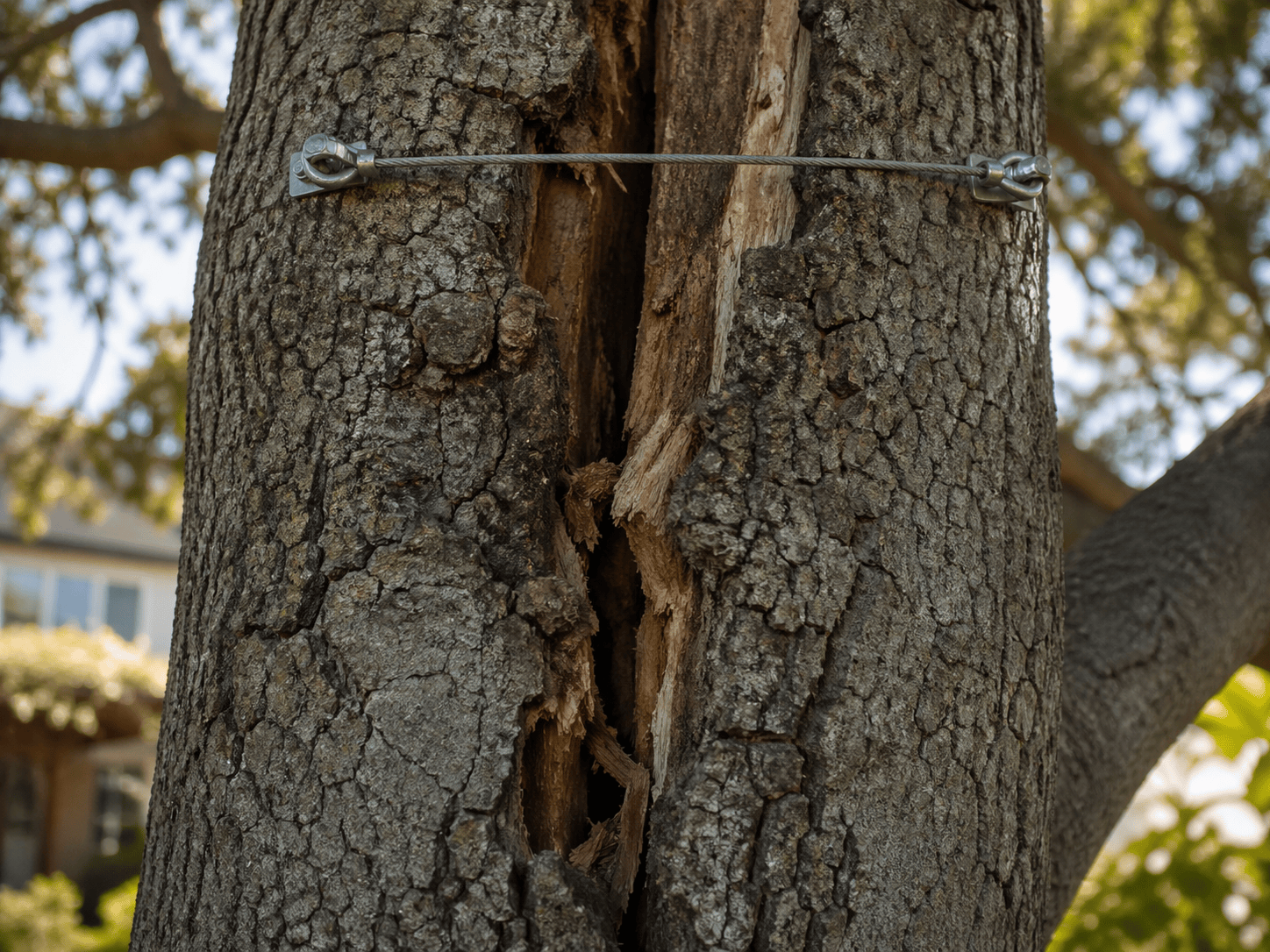
- Large branches are audibly cracking or visibly separating
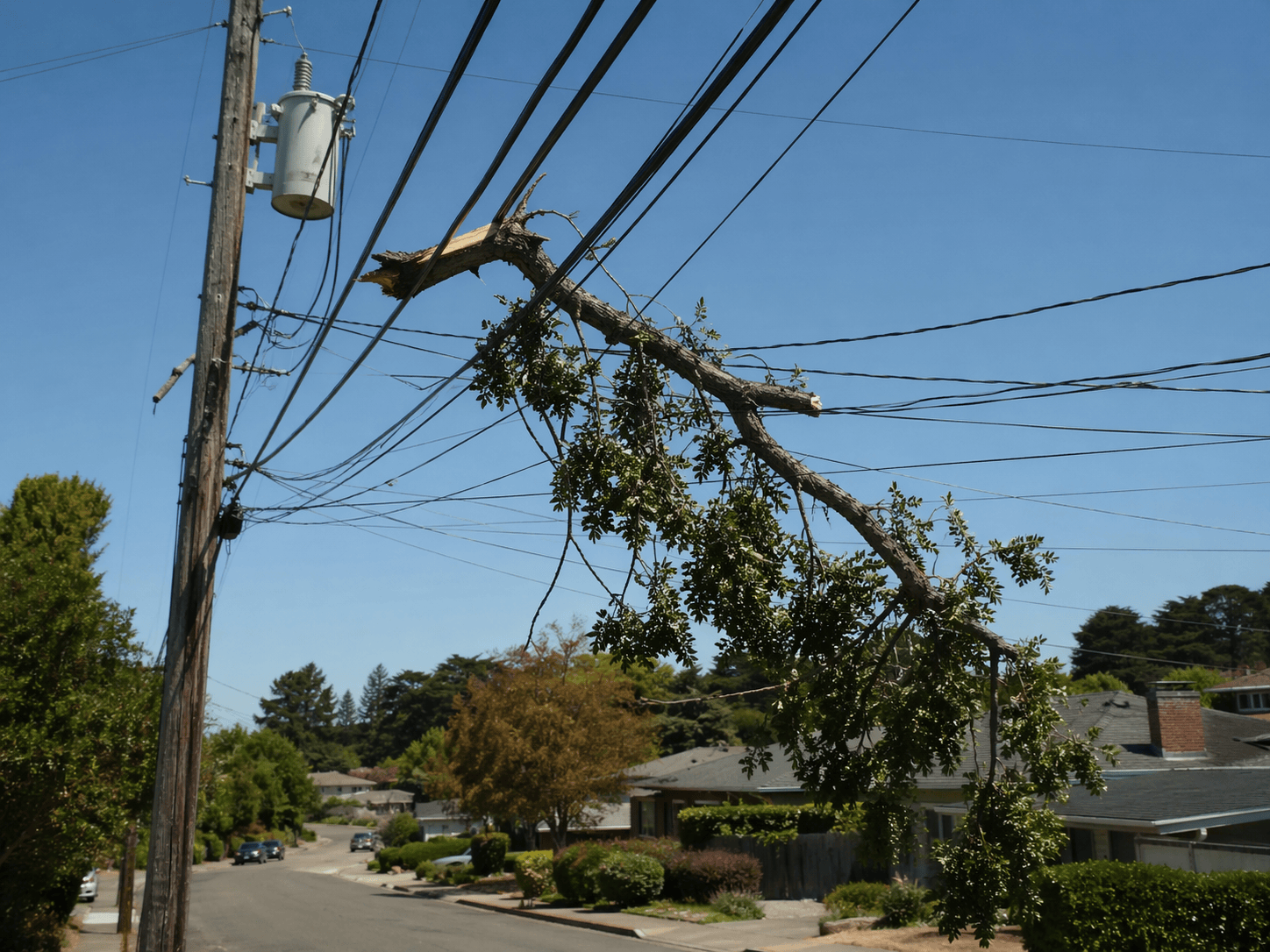
- It is in contact with, or about to contact, power lines
- It is blocking emergency vehicle access
In these cases most cities allow a licensed contractor to proceed with careful, rigged removal and file the paperwork after the fact. The key is that a professional – ideally an ISA Certified Arborist – documents the hazard condition before any cutting happens.
How to confirm a tree is “dead”
Before removing any tree, confirm the diagnosis. A dormant tree in winter can look dead to the untrained eye. Signs of a genuinely dead tree include:
- No leaves or buds during the active growing season (April through September in San Mateo County)
- Brittle, dry branches that snap cleanly with no green interior
- Peeling or detached bark exposing dry wood beneath
- Fungal brackets (shelf mushrooms) at the trunk base or root flare
- A sharp, damp, or mildew smell from the inner bark
Even when a tree is clearly dead, San Mateo County cities often still require a permit if the trunk exceeds protected-species diameter thresholds. A written arborist report documenting tree condition streamlines the permit process considerably.
How to apply for a tree removal permit in San Mateo County
- Submit an application with property address, tree location, species, and approximate trunk diameter.
- Provide documentation: clear photos of the tree, and for protected species, an arborist’s written assessment.
- Allow a site inspection if the city requires one.
- Receive approval and any conditions, which may include a replanting requirement (usually 1 or 2 replacement trees per tree removed).
Typical processing time runs from 1 to 4 weeks depending on the city and season. Emergency removals bypass most of this timeline with proper documentation.
Costs: dead tree removal and permits
| Service | Typical cost | Notes |
|---|---|---|
| Dead tree removal, small (under 30 ft) | $300 – $900 | Simple access, no rigging |
| Dead tree removal, medium (30 to 60 ft) | $600 – $1,800 | Standard residential job |
| Hazardous or complex dead tree | $1,200 – $3,500 | Near structures, rigging required |
| Emergency after-hours removal | $1,000 – $3,000+ | 24/7 dispatch, urgent response |
| City permit fee | $50 – $300 | Varies by jurisdiction |
| Arborist report (if required) | $150 – $500 | Written assessment for permit file |
All Precision Tree Care estimates include removal, debris dumping, and hauling, with no callbacks for extra charges.
City-specific rules: Redwood City and Daly City
Redwood City tree removal permit
Redwood City requires a permit for removal of protected trees, which includes native oaks and trees above specified trunk diameters. Applications typically require photos and an arborist’s assessment for protected species, and approvals often include replacement-planting conditions (1 to 2 trees per tree removed).
Daly City tree removal permit
Daly City’s rules focus on larger and heritage trees. Emergency removals are typically exempt from pre-approval but must be documented and reported shortly after completion. Non-emergency removals, especially of trees visible from the public right of way or affecting neighboring properties, require a standard permit.
Unincorporated San Mateo County
For properties outside city limits – parts of Pescadero, La Honda, and unincorporated pockets – the county planning department handles permits directly, with stricter environmental-review requirements in coastal and hillside zones.
Should you hire a professional?
Dead trees look stable until they are not. Decayed wood does not cut like live wood – it splinters, pinches saws, and can drop large sections without warning. Professional crews carry liability insurance and workers’ compensation (Precision Tree Care is fully insured and bonded), understand local permit rules, and can produce the documentation the city will ask for. For any dead tree larger than a typical sapling, and for any tree near a structure or power line, professional removal is the safer economic choice.
Preventing future removals
- Annual inspections: early detection of disease or decline often means a tree can be treated rather than removed.
- Proactive deadwood removal: reduces fire fuel and branch-drop risk on otherwise healthy trees.
- Fire prevention clearance: on hillside properties, scheduled defensible space and brush clearance work catches dead trees before they become Cal Fire citations.
- Avoid topping: the fastest way to shorten a tree’s life is to top it.
For a free estimate on dead tree removal anywhere in San Mateo County – including permit paperwork assistance – call Precision Tree Care at (650) 355-1277.
Frequently asked questions
1. Do I need a permit to remove a dead tree on my own property?
In San Mateo County, usually yes, unless the tree is below the protected-species diameter threshold and not a regulated species. Every city in the county has a tree protection ordinance of some kind, and most cover dead trees too – the ordinance protects the site (including replanting requirements) rather than just the living tree. The fastest way to know: call your city’s planning or public works department with the tree species and trunk diameter, or ask a certified arborist during a free estimate.
2. Is emergency dead tree removal exempt from permits?
Most San Mateo County cities allow emergency removal of trees in imminent hazard condition with retroactive documentation filed within 48 to 72 hours. “Imminent hazard” generally means actively falling, leaning toward a structure, in contact with power lines, or blocking emergency access. Dead but stable trees far from any target usually do not qualify for the emergency exception, even if they are clearly dead.
3. How much does it cost to remove a dead tree in San Mateo County?
Small dead trees under 30 feet typically cost $300 to $900. Medium trees (30 to 60 feet) run $600 to $1,800. Large or hazardous dead trees near structures, requiring rigging or aerial lift, generally cost $1,200 to $3,500, and complex removals on steep hillsides or near power lines can go higher. All Precision Tree Care estimates include removal, hauling, and dumping fees with no hidden callbacks.
4. How quickly can I get a dead tree removed?
For non-emergency removals with no permit required, typically within a week of accepting the estimate. For protected species requiring a permit, 1 to 4 weeks depending on the city’s backlog. For genuine emergencies, the crew can be on site within hours – Precision Tree Care answers 24/7 at (650) 355-1277, and most San Mateo County residential emergency responses arrive within a few hours of dispatch.
5. What if the dead tree is on the property line or shared with a neighbor?
If the trunk crosses the property line, legally it is considered a shared tree, and removal typically requires agreement from both owners. If the trunk is entirely on one property but branches or roots extend into yours, you generally can trim what crosses your property line, but you cannot remove the tree without the owner’s consent. For a dead or dying shared tree, get a written arborist report documenting the condition and share it with your neighbor.
6. What happens if I remove a protected tree without a permit?
Fines in San Mateo County cities typically range from $500 to $10,000 per tree, scaled by trunk diameter and species value. Atherton, Hillsborough, and Palo Alto have some of the stricter enforcement regimes – unauthorized oak removal in those cities regularly triggers four- and five-figure fines plus mandatory replanting.
7. Does homeowner’s insurance cover dead tree removal?
Generally no, unless the dead tree has already fallen onto a covered structure. Insurance covers unexpected events, not maintenance. The narrow exception: some policies cover preventive removal under “imminent peril” language if a certified arborist documents in writing that the tree is in active failure and threatens a covered structure.
8. Can I just cut the tree down myself to save money?
For small saplings (under 4 inches trunk diameter) with no structures nearby, a careful homeowner with the right tools can usually manage it. For anything larger, and especially for dead trees, the math rarely favors DIY. Dead wood is unpredictable – it pinches saws, splinters under load, and can drop sections without warning. Free estimates available at (650) 355-1277.