
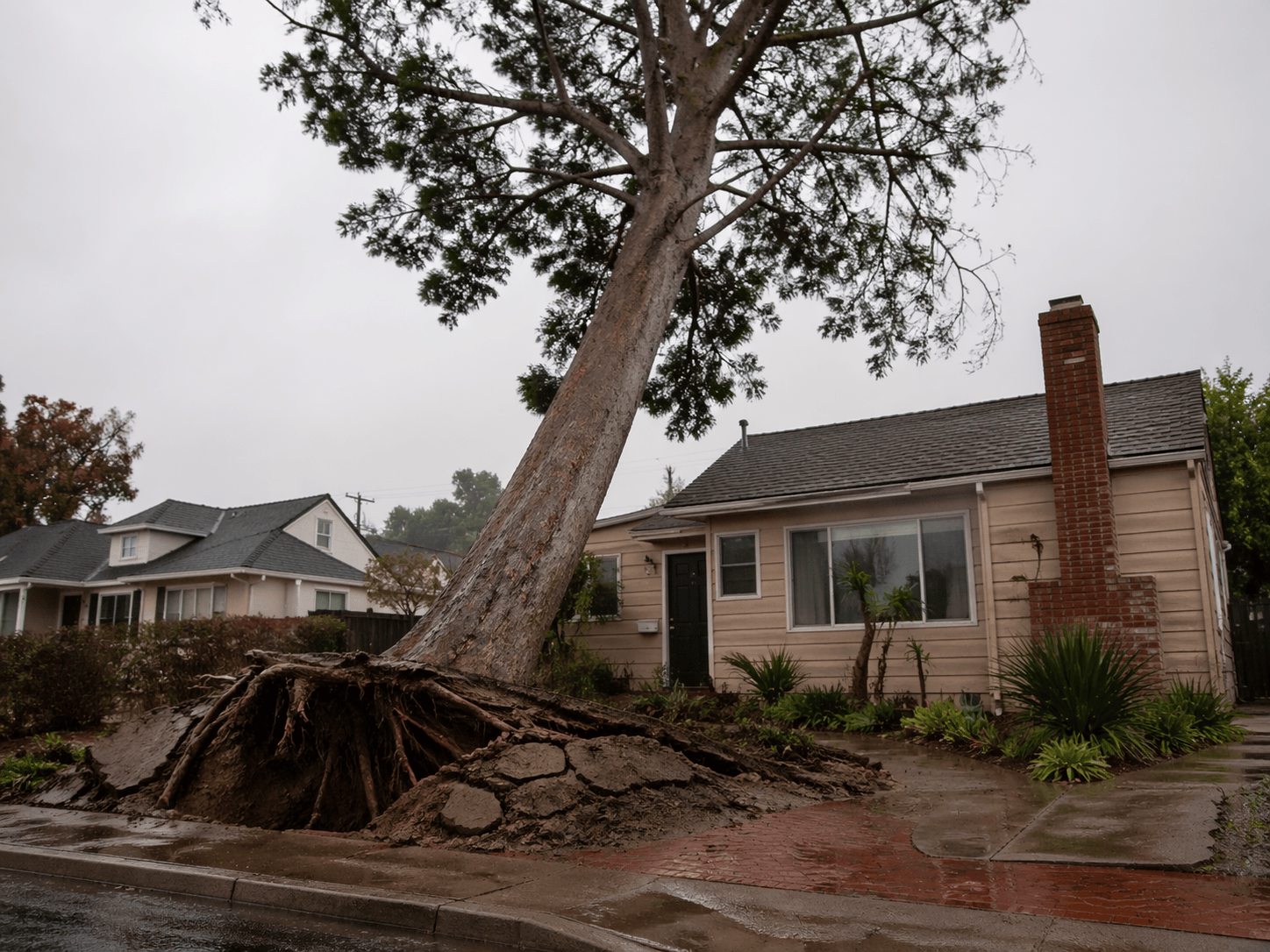
Emergency tree limb removal: Is a hanging broken limb over your roof an immediate danger?
Imagine a heavy tree limb hanging precariously over your roof during a storm. The threat it poses is not just hypothetical – it can lead to serious property damage or even personal injury. Recognizing when a hanging limb becomes a hazard is essential for every homeowner. This article will guide you through the warning signs of dangerous limbs, the risks involved, and when to seek professional help, such as 24/7 emergency tree limb removal. We will also introduce local emergency services in San Mateo County, including Precision Tree Care Inc, and discuss costs and prevention strategies to keep your roof safe.
What are the signs that a hanging tree limb over your roof is dangerous?
Spotting a hazardous hanging limb early can save you from costly repairs and safety risks. Look for these key indicators:
- Broken or cracked limbs: Visible fractures or breaks suggest the limb is unstable and may fall.
- Sudden lean with root heave: A tree leaning noticeably or roots pushing up from the ground indicate structural weakness.
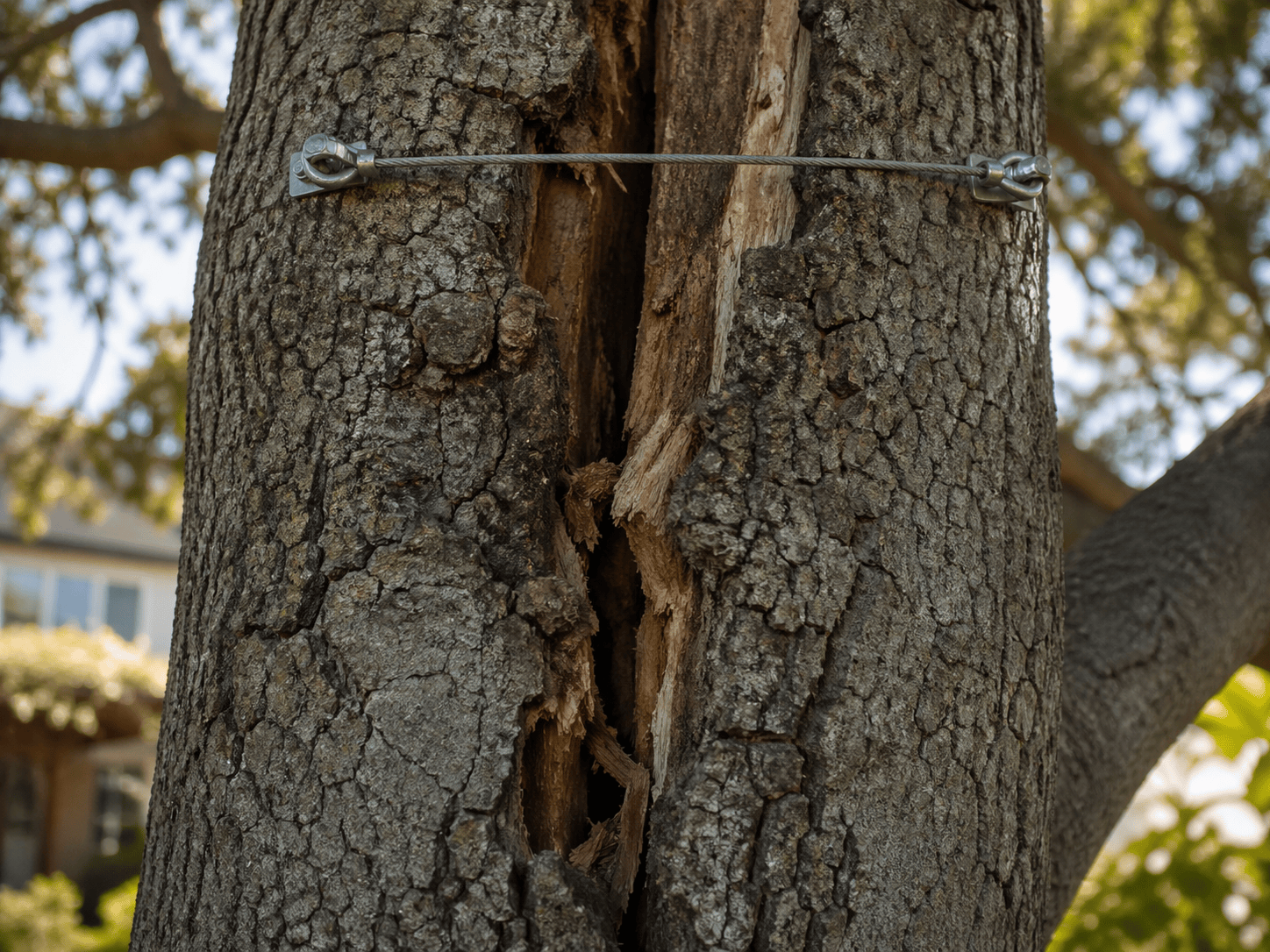
- Split trunk: A trunk showing splits can fail suddenly, posing a serious threat.
Being aware of these signs helps you act before an accident happens.
How to assess the hazard severity of a broken limb over your roof?
To evaluate the risk posed by a hanging limb, follow these steps:
- Identify the location: Measure how close the limb is to your roof and other structures.
- Evaluate the condition: Check for cracks, breaks, or decay that weaken the limb.
- Consider immediate risks: Think about what could happen if the limb falls, including damage or injury.
These steps help you decide if professional intervention is necessary.
When a tree threatens a target such as a home, failure can cause property damage, disrupt services, or endanger safety. Various qualitative methods exist worldwide to systematically assess and manage tree risks. – Risk assessment and risk perception of trees: A review of literature relating to arboriculture and urban forestry, RW Klein, 2019.
What risks does a hanging tree branch pose to roof safety?
A hanging branch can threaten your roof in several ways:
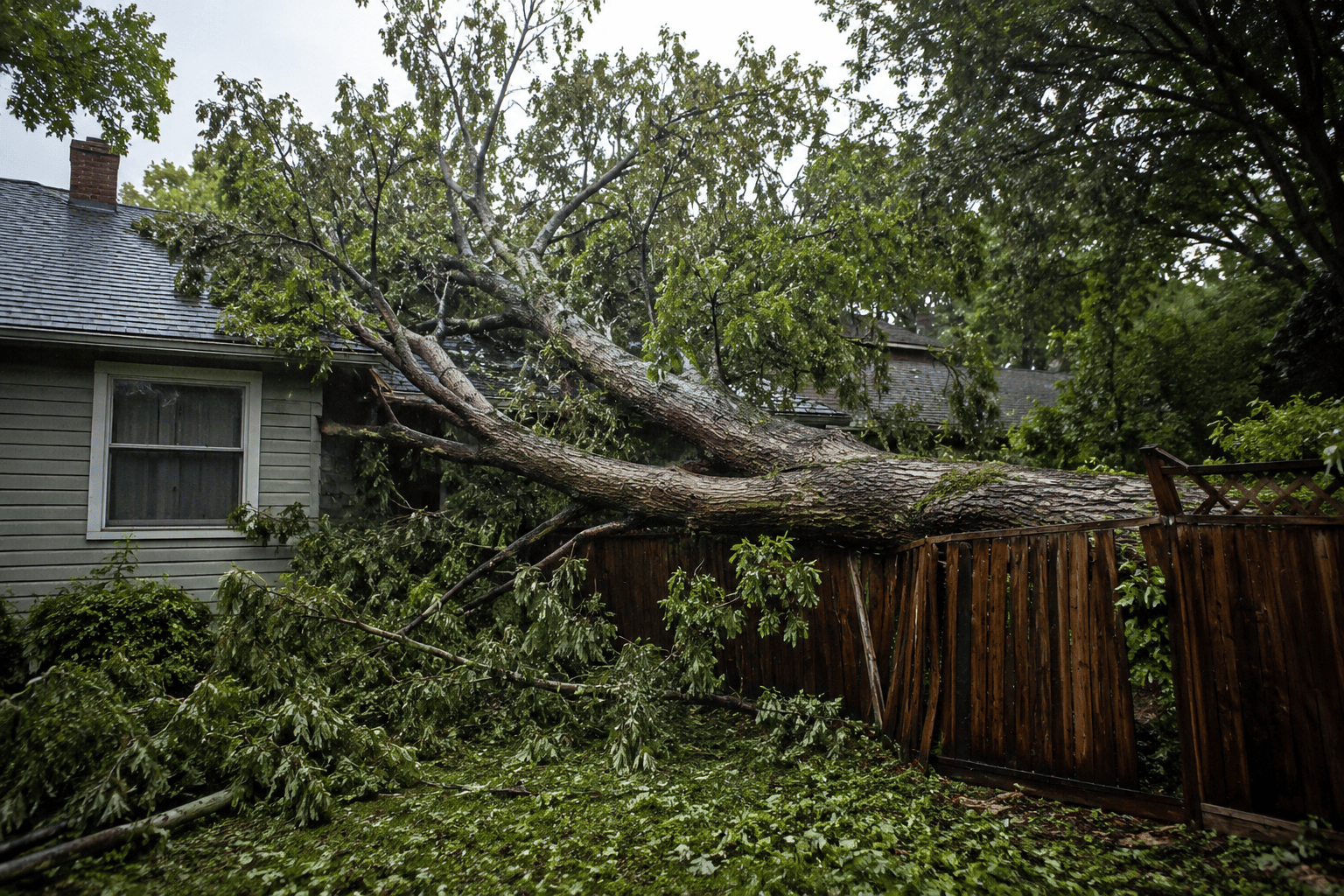
- Direct threat of falling: The limb may fall and cause significant damage.
- Scraping and wear: Branches rubbing against shingles can degrade roofing materials over time.
- Increased risk during storms: Wind and storms increase the chance of limb failure.
Understanding these risks highlights the need for timely action.
When should you call emergency tree branch removal services?
Knowing when to call for emergency removal can prevent further damage and keep everyone safe. Consider these situations:
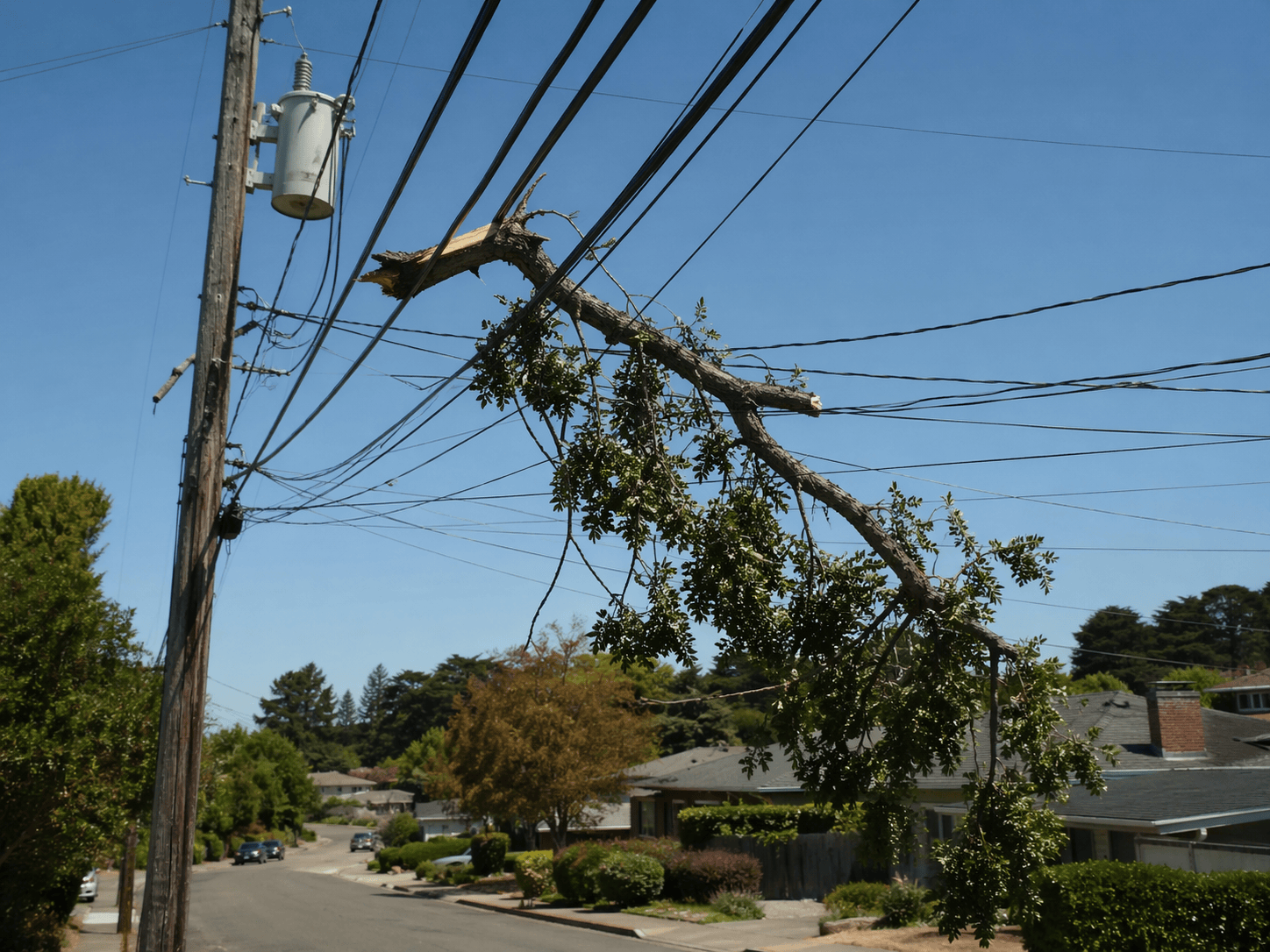
- Tree on or near power lines: Limbs close to power lines pose electrical hazards.
- Tree blocking road or driveway access: Fallen limbs can obstruct access and require prompt removal.
- Sudden lean with root heave: A leaning tree with root upheaval needs immediate professional attention.
In these cases, contacting certified arborists for challenging tree removal ensures expert help is on the way.
How quickly should urgent tree limb removal be performed?
Urgent removal should happen as soon as a dangerous condition is identified to minimize risk and damage.
What safety protocols do professionals follow during emergency removal?
Professional tree services follow strict safety measures, including:
- Careful planning: Assessing the site and planning the safest removal method.
- Advanced rigging techniques: Using specialized equipment to remove limbs safely.
- Expertise and training: Skilled workers trained to handle emergencies effectively.
These protocols protect both workers and property during removal.
Which local emergency tree limb removal services are available in San Mateo County?
San Mateo County residents can access several emergency tree limb removal services, including:
- 24/7 emergency service: Providers offer round-the-clock availability for urgent needs.
- Specialization in challenging tree removal: Local experts understand the region’s tree species and conditions.
- Contact information: For immediate help, reach Precision Tree Care Inc at (650) 355-1277.
Using local services ensures prompt, knowledgeable assistance tailored to your area.
How do tree care professionals serve San Mateo County property owners?
Tree care experts provide a variety of services to maintain property safety and health:
- Tree trimming and pruning: Regular maintenance reduces hazards.
- Tree removal: Safe removal of risky trees.
- Stump grinding and removal: Clearing stumps to keep areas safe and usable.
What are the benefits of choosing local emergency tree services?
Local emergency tree services provide numerous advantages that can enhance safety and efficiency for homeowners. Below is a comparison of key benefits that highlight why selecting a local provider is often the best choice.
| Benefit | Description | Impact on homeowners |
|---|---|---|
| 24/7 emergency availability | Immediate response to urgent situations, ensuring quick action. | Minimizes potential damage and enhances safety. |
| Experience and personalized service | Local experts understand regional challenges and provide tailored solutions. | Improves service quality and effectiveness. |
| Local focus and expertise | Familiarity with local tree species and conditions enhances service delivery. | Ensures appropriate care and maintenance for specific trees. |
What is the cost and process of emergency tree limb removal?
Knowing the typical costs and steps involved helps homeowners prepare:
| Step | Description |
|---|---|
| Initial assessment | Professional evaluates the situation to plan removal. |
| Dispatching team | A crew is sent to perform the removal. |
| Removal and cleanup | Limb is removed and the area is cleaned for safety. |
How are cost estimates determined for urgent tree branch removal?
Several factors influence pricing:
- Complexity of the job: Difficult removals require more equipment and labor.
- Location of the tree: Hard-to-reach trees increase costs.
- Condition of the tree: Poor tree health demands careful handling.
What steps are involved in professional emergency limb removal?
- Initial assessment: Determine the safest removal method.
- Team dispatch: Send trained crew to the site.
- Documentation for insurance: Provide records to support claims.
How can you prevent roof damage from hanging tree branches?
Taking proactive steps can protect your roof from damage caused by tree branches:
- Regular trimming: Keep limbs trimmed away from your roof.
- Crown reduction and thinning: Maintain tree health and reduce the risk of falling branches.
- Assessing tree health: Regular checks to catch problems early.
What roof safety tips help avoid tree branch damage?
- Schedule regular fine pruning on trees within 20 feet of your roofline – most branch failures happen on limbs that have not been inspected in 3+ years.
- Remove deadwood: Dead branches are more likely to fall and should be removed.
- Post-storm evaluations: Check for damage after severe weather.
What post-removal care is recommended to protect your roof?
- Monitor tree health: Watch remaining trees for stability.
- Schedule follow-up assessments: Regular evaluations to catch new issues.
Frequently asked questions
1. How can I tell if a hanging limb is actually an emergency or just cosmetic?
Three diagnostic questions. (1) Is there any part of the limb still attached? A fully broken limb wedged in the canopy is high-risk – it can drop with no warning when wind shifts, when a branch underneath it fails, or when a bird lands on it. Partially attached limbs can rip further if they twist. (2) What is directly below it? A limb hanging over the driveway, walkway, a vehicle, or a part of the roof where people sleep is higher priority than one over a side yard. (3) What is the weather forecast? A hanger that would be low-priority in calm conditions becomes urgent with an incoming wind or rain event. If you answer “yes, high-risk, worsening weather” to any combination – call. Most emergency assessments from Precision Tree Care are free over the phone at (650) 355-1277.
2. Is it safe to remove a hanging tree limb myself?
Almost never, and less so than a typical DIY pruning job. Hangers are branches that have already failed – they are under weird load, often partially attached by bark strips or wedged on a fork, and cutting them from below invites the limb to drop directly onto you or your ladder. They also tend to be high up, which means ladder work at a height where a fall causes serious injury. Professional crews use aerial lifts, throw-lines, and rigging ropes to lower hangers in a controlled manner – often dropping them in pieces rather than whole. If the hanger is over a roof, DIY attempts also risk punching through shingles or skylights when the limb lets go.
3. How quickly should I have a dangerous hanging branch removed?
For a clear hazard – hanger over a roof, driveway, walkway, parking area, or anywhere people spend time – within 24 hours is the right mental model, sooner if wind or rain is forecast. For a hanger over an unoccupied section of yard with no targets below, you have more runway (a few days), but do not let it become “normal.” Trees will not self-correct a failed limb – wind, weight, and wildlife only make it worse over time. Our 24/7 line at (650) 355-1277 prioritizes these calls; most San Mateo County emergency responses arrive within a few hours of dispatch.
4. Will my homeowner’s insurance cover damage from a falling branch?
Usually yes, if the branch causes damage to a covered structure or personal property – roof, gutters, car, fence, shed. Your claim is typically filed under “falling object” coverage or general property damage. Coverage of the branch removal itself, absent damage, is a harder sell: most policies cover removal only if the limb has actually hit something or is blocking access. A few practical notes: (a) if the tree is visibly decayed and you have had prior warnings, the insurer may push back under “negligent maintenance” – annual arborist inspections close that gap; (b) get a written arborist report documenting the failed limb and conditions, not just invoices, to strengthen your claim.
5. How often should I have trees near my house inspected?
Annually at minimum for any tree within 30 feet of the house, driveway, or power lines – more often for fast-growing species (eucalyptus, Monterey pine, Monterey cypress), older trees with prior damage, or trees on slopes with erosion risk. A proper visual tree assessment by an ISA Certified Arborist (our credential is #WE-12520A) takes about 20-40 minutes per tree and identifies cavities, decay fungi at the root flare, co-dominant stems, weak branch unions, and recent leans – all factors that predict limb drops. In San Mateo County’s climate, post-storm and post-drought seasons are particularly important because both stress trees in ways that show up months later as limb failures.
6. What causes healthy-looking trees to drop large branches suddenly?
This is often called summer limb drop or sudden branch drop syndrome – most common from July through September in the Bay Area, particularly on oaks, sycamores, elms, and some eucalyptus species. The leading theories involve water stress combined with branch weight, internal moisture imbalances, and microscopic fractures in wood fibers that accumulate over time. The practical takeaway: apparently healthy trees can fail during hot, calm summer afternoons – no wind, no warning. Species with known tendency benefit from periodic crown reduction to decrease end weight on long lateral branches, and from inspection of large limbs for longitudinal cracks or “shear lines.” This is why we recommend annual inspections even on trees that look fine.
7. Can a hanging limb be stabilized instead of removed?
Rarely for a broken limb – by the time wood has failed, the structural integrity is compromised at the failure point and cannot be restored. What can be stabilized with cabling and bracing: (a) co-dominant stems with an incipient crack (before they fail), (b) heavy lateral limbs on a valuable tree that you want to preserve, (c) split trunks caught early. For an already-broken hanger, the correct answer is controlled removal of the failed limb, often combined with a reduction cut on the parent branch to prevent the same limb union from failing again. If the tree itself is structurally valuable, ask whether a cabling system elsewhere in the canopy could extend its life.
8. What does emergency tree limb removal typically cost?
For a single hanger accessible from an aerial lift, expect a range depending on (a) height and reach required, (b) time of day (off-hours rates are higher), (c) clean-up scope, and (d) any roof or structural proximity that requires extra rigging. Most San Mateo County residential hanger removals fall in the mid hundreds to low thousands, with the top of that range reserved for crane jobs and multiple hangers. Critical details to get on every estimate: is debris hauling and dumping included, is clean-up guaranteed, and will the written invoice document the condition (for your insurance claim). We provide free estimates at (650) 355-1277 – no surprise charges, no callback fees.
Conclusion
Addressing the risks posed by hanging tree limbs is crucial for safeguarding your home and ensuring the safety of your family. By recognizing warning signs and knowing when to seek professional help, you can prevent costly damage and maintain peace of mind. Do not wait for a storm to act; consider contacting local experts like Precision Tree Care Inc for timely assistance. Explore our services today to protect your property and enhance your safety.