

Not every tree problem is a 2 a.m. phone call. Here’s how to tell the difference — and why it matters for your wallet.
The Problem: Everything Feels Urgent After a Storm
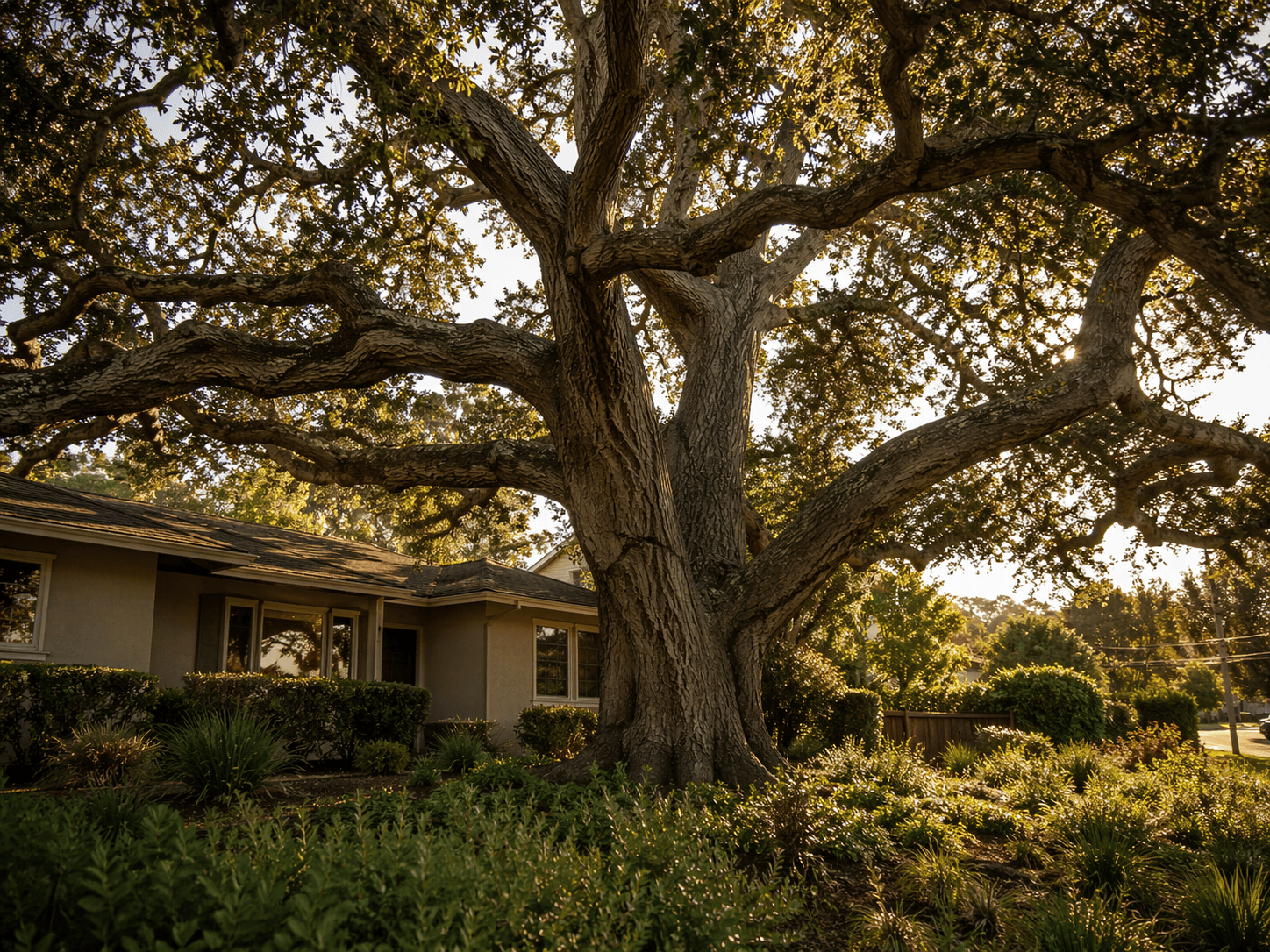
You wake up after a rough night of wind and rain, walk outside, and see a big branch hanging in your oak tree. Or a neighbor’s pine is leaning more than it was yesterday. Or there’s a crack in the trunk of the eucalyptus near your driveway that you’ve never noticed before.
Your first instinct is to call someone right now. And sometimes that’s exactly the right call. But sometimes it’s not — and the difference between an emergency call and a scheduled visit can save you thousands of dollars.
Emergency tree work costs 2–4x more than the same job done on a normal schedule. Night and weekend rates, rush dispatch, specialized rigging under pressure — it all adds up. Knowing when you genuinely need emergency service and when you can safely wait for a scheduled appointment is one of the most valuable things a homeowner can learn.
Call Right Now: Genuine Emergencies
These situations can’t wait. The risk of injury, structural damage, or escalation is too high. Call a 24/7 tree service immediately:
Tree on a structure
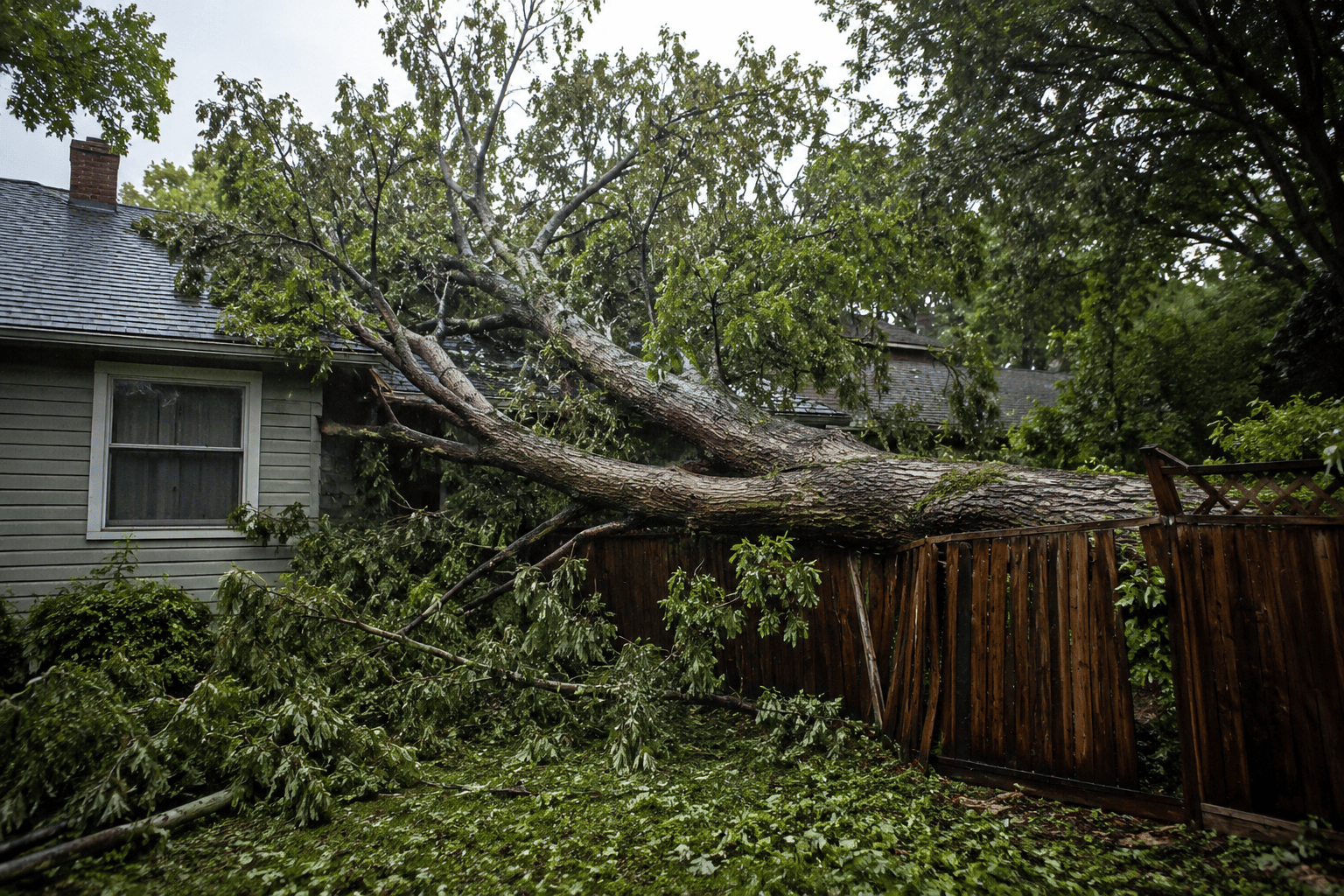
A tree resting on your house, garage, or carport is actively causing damage. Weight shifts with wind and temperature changes. A tree that’s sitting quietly on your roof at 8 a.m. can punch through by noon. Every hour of delay means more structural damage and a bigger repair bill. This is always an emergency.
Tree on or near power lines
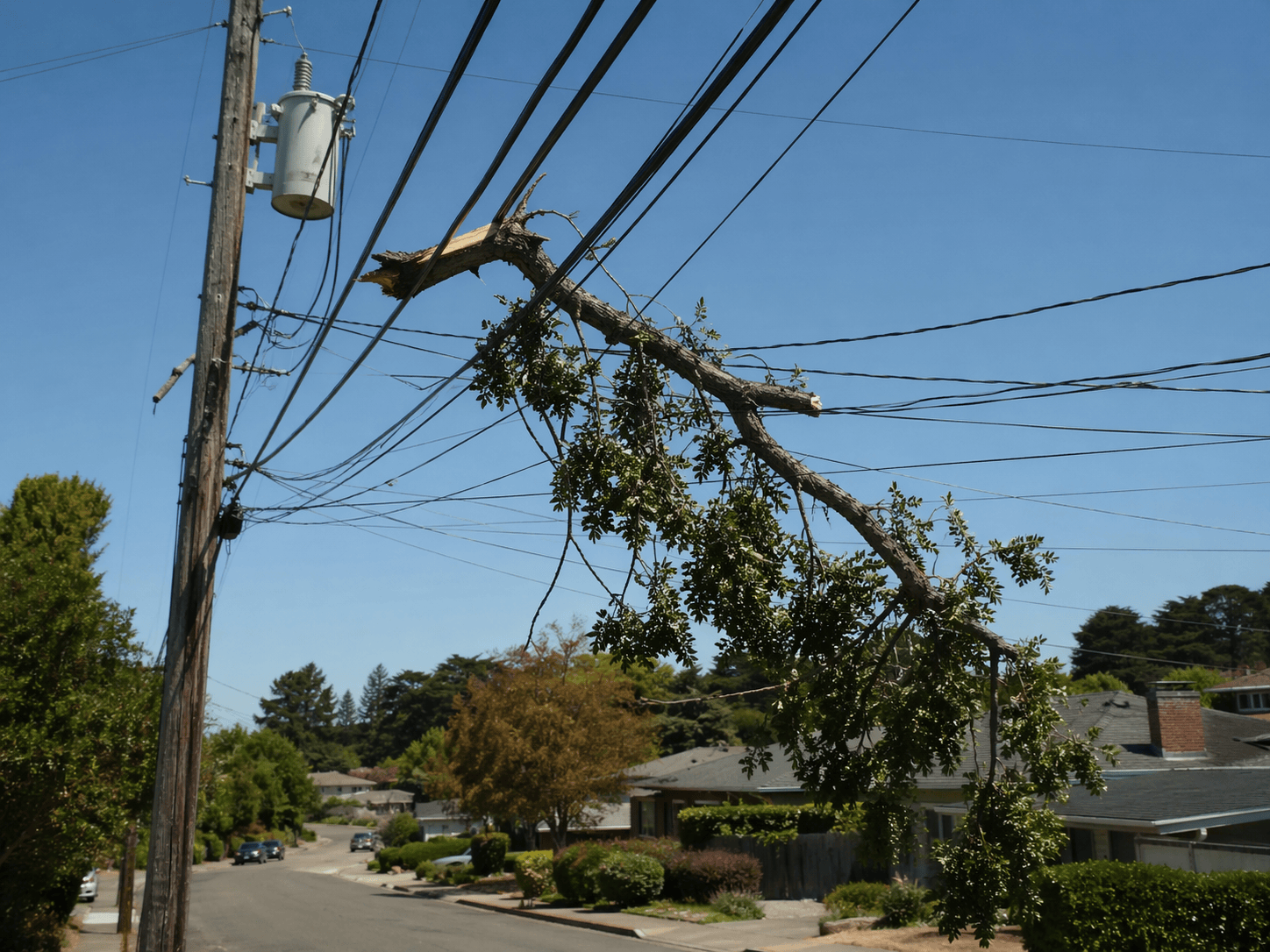
The most dangerous scenario. Don’t approach — call 911 first, then PG&E (1-800-743-5000), then a tree service. Power lines can arc electricity through the air, and a tree touching a live wire makes the entire trunk a conductor. Even lines that look dead can be energized.
Tree blocking road or driveway access
If you can’t get out — or emergency vehicles can’t get in — this needs to be cleared immediately. Don’t try to drive over or around a downed tree. Damaged root systems can leave sinkholes, and downed wires may be hidden under debris.
Sudden lean with root heave
If a tree that was straight yesterday is now leaning, and you can see cracked or lifted soil on the opposite side — the root system has failed. This tree can come down at any moment, in any direction. Get people away and call immediately.
Split trunk
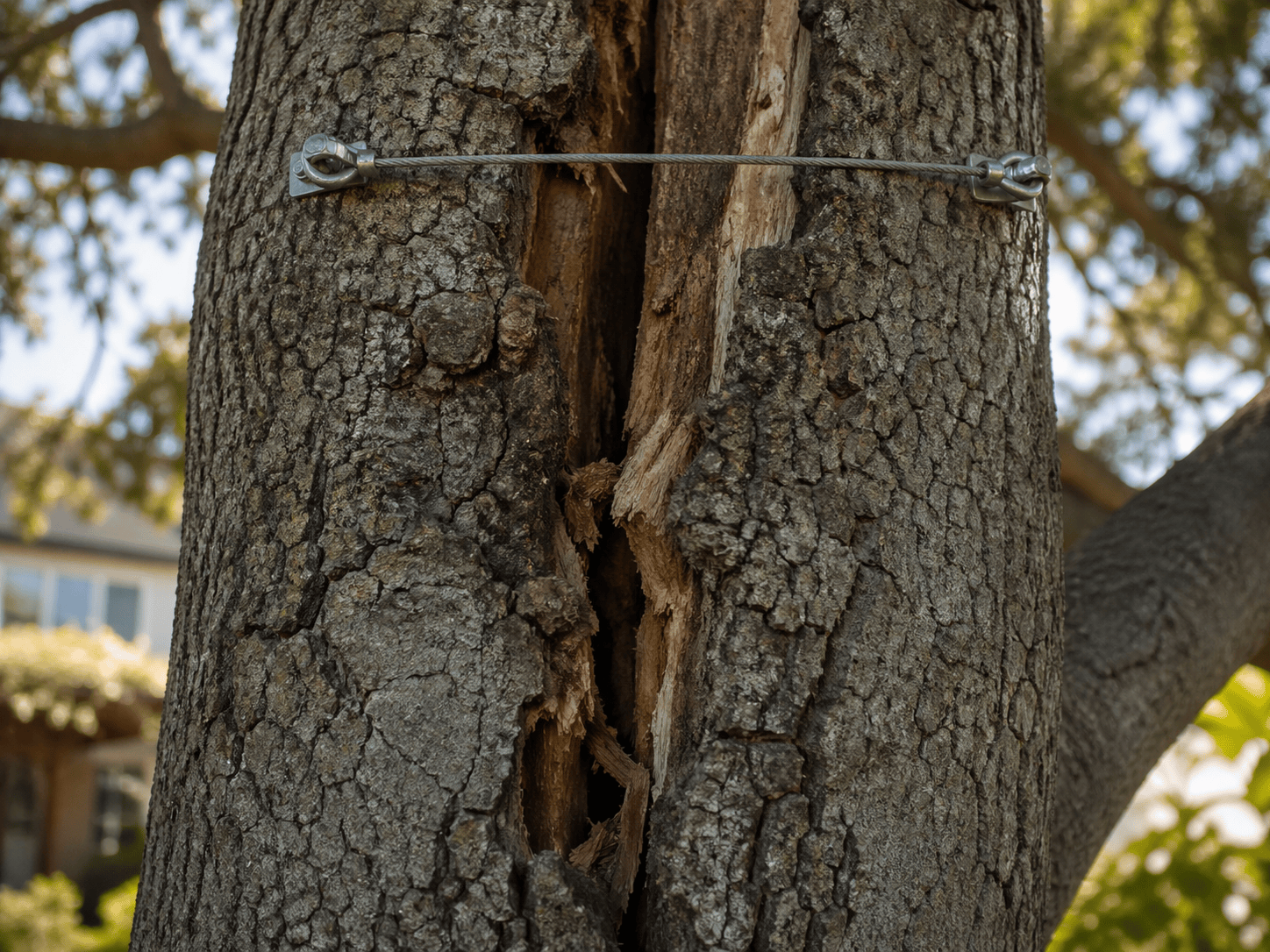
A vertical crack through the main trunk means the tree has lost structural integrity. It’s holding itself together by friction and habit — until it isn’t. If the split trunk is near any target (structure, walkway, road, play area), this is an emergency.
Call This Week: Urgent but Not Immediate
These situations need professional attention soon — within days, not weeks — but you don’t need to pay emergency rates. Schedule a priority visit during normal business hours:
Large hanging branch (not over a target)
A broken limb suspended in the canopy is dangerous, but if it’s hanging over an empty area of your yard — not over your house, car, walkway, or where kids play — you can schedule removal within a few days. Just keep everyone out of the area underneath until it’s handled.
New crack in a branch union
A crack where a major limb meets the trunk is a structural warning, but if the branch isn’t directly threatening a structure or high-traffic area, you have a short window to get it assessed and addressed. Days, not weeks.
Storm-damaged canopy
Broken branches, torn bark, splintered limbs still attached — the tree took a hit but nothing has fallen yet. This needs cleanup pruning to remove damaged wood before the next storm finishes the job. Schedule it within the week.
A tree that’s started leaning gradually
Unlike sudden lean (which is an emergency), a slow, progressive lean over weeks or months means the tree is declining but not about to fall today. Get an arborist out to assess it soon. They’ll tell you whether it needs cabling, pruning, or removal — and you’ll have time to plan.
Schedule When Convenient: Can Wait Weeks or Months
These issues are real and shouldn’t be ignored, but there’s no rush. You can get multiple estimates, choose your timing, and save significantly compared to emergency rates:
Dead branches in the upper canopy
Deadwood should be removed — it will eventually fall. But if it’s not directly over a structure, vehicle, or walkway, you can wait for your next scheduled pruning visit. Add it to the list.
Tree outgrowing its space
Branches scraping your roof, blocking your driveway, or crowding power lines. This needs crown reduction or removal, but it’s been getting worse for months — another few weeks won’t change the risk profile. Schedule it during the dry season when rates are lower and arborists have more availability.
Dense canopy that hasn’t been thinned in years
A thick canopy increases wind resistance and storm risk, but it’s a chronic problem, not an acute one. Best handled as preventive work in early fall before storm season — ideally September or October.
Cosmetic issues
Unbalanced shape, crossing branches, water sprouts, view obstruction. These affect aesthetics and long-term tree health, but they’re not safety issues. Handle them on a normal maintenance schedule.
Stump from a previous removal
Stumps are ugly and can attract termites, but they’re not going anywhere. Grind it when it’s convenient.
A Quick Decision Guide
| Situation | Urgency | Action |
|---|---|---|
| Tree on house, car, or power lines | Call now | 24/7 emergency service |
| Sudden lean with root heave | Call now | 24/7 emergency service |
| Split trunk near a target | Call now | 24/7 emergency service |
| Blocked driveway or road | Call now | 24/7 emergency service |
| Hanging branch over empty yard | This week | Priority scheduled visit |
| Storm-damaged canopy, nothing fallen | This week | Priority scheduled visit |
| Gradual lean, no root heave | This week | Arborist assessment |
| Deadwood not over a target | Schedule it | Next pruning visit |
| Overgrown canopy, branches on roof | Schedule it | Before storm season |
| Cosmetic / shape / view issues | Schedule it | Normal maintenance |
One More Thing: Don’t Let Fear Drive the Decision
After a big storm, everything feels like an emergency. You’re stressed, the yard looks like a disaster zone, and the instinct is to get someone out here right now. That’s understandable — but it’s also when people overpay or hire the first person who shows up, including unlicensed “storm chasers” going door-to-door.
Take a breath. Use the guide above. If it’s genuinely dangerous — call immediately. If it’s not — take a day, get a proper estimate from a licensed company, and save yourself a lot of money.
About Precision Tree Care Inc.
We’re a locally owned tree service based in Pacifica, serving San Mateo County and the Mid-Peninsula. ISA-certified arborists, 40+ years combined experience, licensed, insured, and bonded. We do both emergency and scheduled work — and we’ll tell you honestly which one you need.
Not Sure If It’s an Emergency?
Call us and describe what you see. We’ll tell you whether it needs immediate attention or can wait for a scheduled visit — no pressure, no upsell. If it’s urgent, we’ll dispatch. If it’s not, we’ll schedule you at normal rates.
Precision Tree Care Inc. — Pacifica, CA