
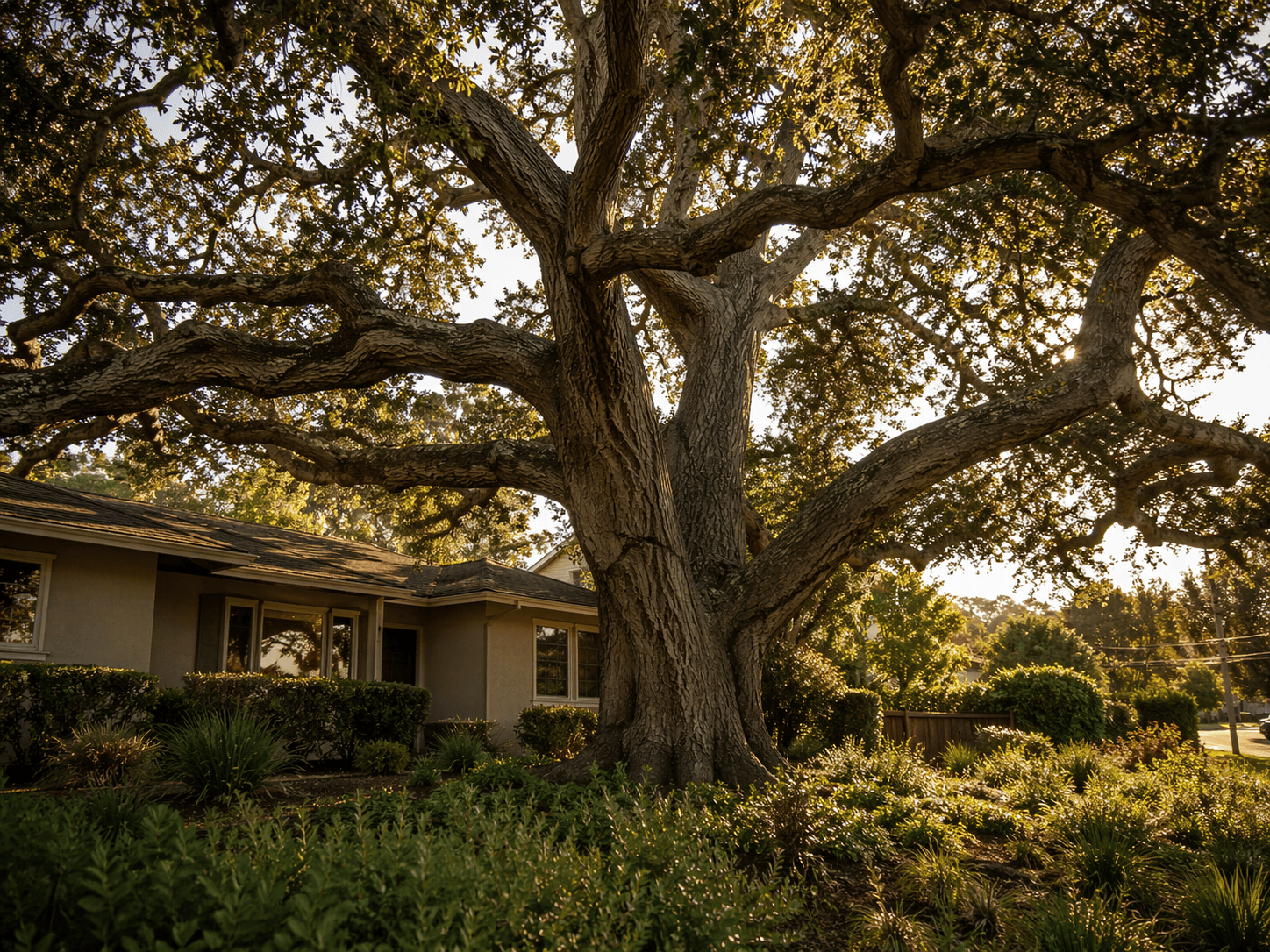
You want to take down or cut back a big tree on your lot in San Mateo, and someone told you it might be “protected.” In the City of San Mateo, a tree is protected if it is a heritage tree – an oak 10 inches or more in trunk diameter, or any other species 15 inches or more, measured 54 inches above grade – a street tree, or a tree tied to an approved planning application. Removing one, or pruning away more than 25 percent of its crown, requires a permit from the city first. Every other city in San Mateo County has its own threshold, and the unincorporated county has a separate ordinance again.
This guide explains how to tell if your tree is protected, what the City of San Mateo and neighboring cities actually require, what happens when a tree comes out without a permit, and how a written arborist report turns a “maybe” into an approved permit. It is written for homeowners, but the same rules apply to HOAs, property managers and anyone selling a house with a large tree in the yard.
What counts as a protected tree in San Mateo?
The City of San Mateo regulates trees under Chapter 13.40 of its Municipal Code, and the Parks and Recreation Department publishes Protected Tree Administrative Guidelines (revised July 2025) that spell out the definitions. There are three categories:
- Heritage trees. Defined by size, not by species alone. An oak with a trunk diameter of 10 inches or more (31.4 inches around) qualifies. Any other species qualifies at 15 inches in diameter or more (47.1 inches around). Both are measured 54 inches (4.5 feet) above grade.
- Street trees. Trees in the public right-of-way, usually the planting strip between the sidewalk and the curb. These need a city permit for any pruning at all, not just removal.
- Trees designated as protected in an approved planning application. If a tree was kept as a condition of a building permit or a subdivision approval, it stays protected regardless of size.
Two practical points follow from this. First, the common idea that “only oaks and redwoods are protected” is wrong in San Mateo – a 15-inch Monterey pine, liquidambar or magnolia is a heritage tree too. Second, the measurement matters. A tree that reads 14 inches at chest height is not a heritage tree; the same tree at 15 inches is. Our arborist measures with a diameter tape at exactly 54 inches and photographs the tape in place, because the permit application asks for this number.
“Protected Trees include Heritage Trees, Street Trees, and any trees designated as protected as part of an approved Planning Application. A permit is required to remove a Protected Tree.”
– City of San Mateo Parks and Recreation, Protected Tree Administrative Guidelines (revised July 2025), Municipal Code Chapter 13.40
How to check whether your tree is protected
You can do the first pass yourself in ten minutes. Nothing here involves climbing or cutting.
- Find the right jurisdiction. A San Mateo mailing address does not always mean City of San Mateo rules. Parts of the San Mateo Highlands, Emerald Hills and the coastside are unincorporated county land, where the county ordinance applies. Your property tax bill or the county parcel map will tell you.
- Measure the trunk at 54 inches above the ground. Wrap a tape around the trunk and note the circumference. Divide by 3.14 for the diameter. On a slope, measure from the uphill side of the natural grade. For a multi-trunk tree, note each trunk – cities combine them in different ways.
- Identify the species. Oaks (coast live oak, valley oak, blue oak) have a lower threshold in San Mateo, Menlo Park, Atherton, Palo Alto and the county. If you are not sure whether the tree is an oak, take a photo of the leaves and acorns.
- Check whether it sits in the right-of-way. Anything between the sidewalk and the street is a street tree.
- Look at your property file. If the house was built, remodeled or subdivided in the last couple of decades, the approved plans may show trees marked “to be retained.” Those are protected.
If the tree is anywhere near a threshold, or you are not sure about the species, stop and have it measured by an arborist before you book a crew. A licensed contractor will not remove a protected tree without seeing the permit, and neither will we.
Protected tree rules by city in San Mateo County
This is where most homeowners get caught. The Peninsula has more than twenty cities and each one wrote its own ordinance. The table below covers the City of San Mateo, the unincorporated county and the cities our crews work in most often. Thresholds were checked against each city’s own code or published guidelines on 08/26/2026; ordinances get amended, so confirm with the city before you file.
| Jurisdiction | What counts as protected (private property) | Permit needed? | Source |
|---|---|---|---|
| City of San Mateo | Heritage tree: oak 10 in. diameter or more; any other species 15 in. or more, at 54 in. above grade. Plus street trees and trees designated in a planning approval. | Yes – for removal and for major pruning (more than 25% of the crown). Street trees: any pruning. | San Mateo Municipal Code Ch. 13.40; Protected Tree Administrative Guidelines, rev. July 2025 |
| Unincorporated San Mateo County (Highlands, Emerald Hills, coastside, La Honda, Pescadero and similar) | Significant tree: 12 in. diameter or more anywhere; 6 in. or more in the Residential Hillside (RH) district. Indigenous species (coast live oak, madrone, buckeye, California bay) at 10 in.; Douglas fir and redwood at 18 in. Measured at 54 in. | Yes – for removal, and for pruning of trees 6 in. or more in the RH district. | San Mateo County Planning, Tree Pruning and Removal Permit page; Protected Tree Ordinance (Part Three, Division VIII, County Ordinance Code) |
| Palo Alto | Native species (coast live oak, valley oak, blue oak, black oak, bigleaf maple, incense cedar) 11.5 in. DBH or more; coast redwood 18 in. or more; any other mature tree 15 in. DBH or more (invasive and high-water-use species excluded). Plus street, heritage and designated trees. | Yes – for removal; the city also requires advance notice before maintenance work on protected trees. | Palo Alto Municipal Code 8.10.020; city Tree Ordinance Information page |
| Menlo Park | Heritage tree: native oak 31.4 in. circumference (10 in. diameter) or more; all other trees 47.1 in. circumference (15 in.) or more, at 54 in. above natural grade. | Yes – for removal and for major pruning. | Menlo Park Municipal Code Ch. 13.24 |
| Atherton | Heritage tree: valley oak, coast live oak or blue oak anywhere on the lot with 48 in. circumference (15.2 in. diameter) or more; any other tree of that size located outside the main buildable area. Measured at 54 in. | Yes – for removal and for work that disturbs or damages a heritage tree. | Atherton Municipal Code Ch. 8.10; Heritage Tree Preservation Standards and Specifications (rev. 2023) |
| Hillsborough | Any species 18 in. diameter or more, measured 4 ft 6 in. above grade (ordinance update adopted 03/13/2023). | Yes – for removal; check with the town for pruning rules. | Town of Hillsborough, Tree Protection Ordinance Update page |
| Redwood City | Any tree over 38 in. circumference (12 in. diameter), measured between 6 in. and 36 in. above the ground. | Yes – for removal and for pruning of a protected tree. | Redwood City Code Ch. 35, Tree Preservation; city Tree Permits page |
| Burlingame | Any private tree 44 in. circumference (14 in. diameter) or more at 54 in. above natural grade, plus heritage and city trees (amended 12/16/2024). | Yes – for removal, structural alteration or excessive pruning. | Burlingame Municipal Code Ch. 11.06 |
| Other cities (Belmont, San Carlos, Foster City, Millbrae, San Bruno, Daly City, South San Francisco, Pacifica, Half Moon Bay and others) | Each has its own ordinance and threshold. | Check with the city, or ask our arborist to look it up for your address. | City municipal codes |
Notice how much the numbers move. A 13-inch coast live oak needs a permit in San Mateo, Menlo Park, Palo Alto, Redwood City and the county, but not on its size alone in Hillsborough. A 16-inch camphor tree is protected in San Mateo and Menlo Park but sits below the Hillsborough line. This is why we do not give a “yes or no” over the phone without an address and a measurement. Homeowners in Palo Alto and Menlo Park in particular should assume any large native oak is protected until proven otherwise.
Can you trim a protected tree without a permit?
Usually yes, within limits. The City of San Mateo draws the line at “major pruning,” which the Administrative Guidelines define as removing more than 25 percent of the crown or existing foliage of a heritage tree. Below that, routine work on a heritage tree on private property – dead wood removal, clearance from the roof, light thinning – does not require a permit in San Mateo. Street trees are the exception: the city requires a permit for any pruning of a street tree, even a single low limb over the sidewalk.
Menlo Park, Burlingame and Redwood City use similar “major” or “excessive” pruning language, and the county requires a pruning permit for trees 6 inches and larger in the Residential Hillside district. The 25 percent figure is a city rule, not a universal one, so check your own city before a heavy cut.
There is also an arboricultural reason to stay under that number. Taking more than a quarter of a mature tree’s live crown in one season stresses it, invites sunburn on the exposed bark and triggers the weak, fast regrowth we describe in our guide on fixing over-pruned and topped trees. On native oaks there is a timing issue on top of that – see when not to prune oaks in California before scheduling work in the wet season.
When will the City of San Mateo approve removing a protected tree?
A permit is not a formality, but it is not a lottery either. San Mateo Municipal Code Section 13.40.100 lists the findings the city can use to approve removal, and the Administrative Guidelines describe them in plain terms:
- Condition of the tree. It is dead, or in a poor state of health that cannot be corrected through reasonable arboricultural treatment.
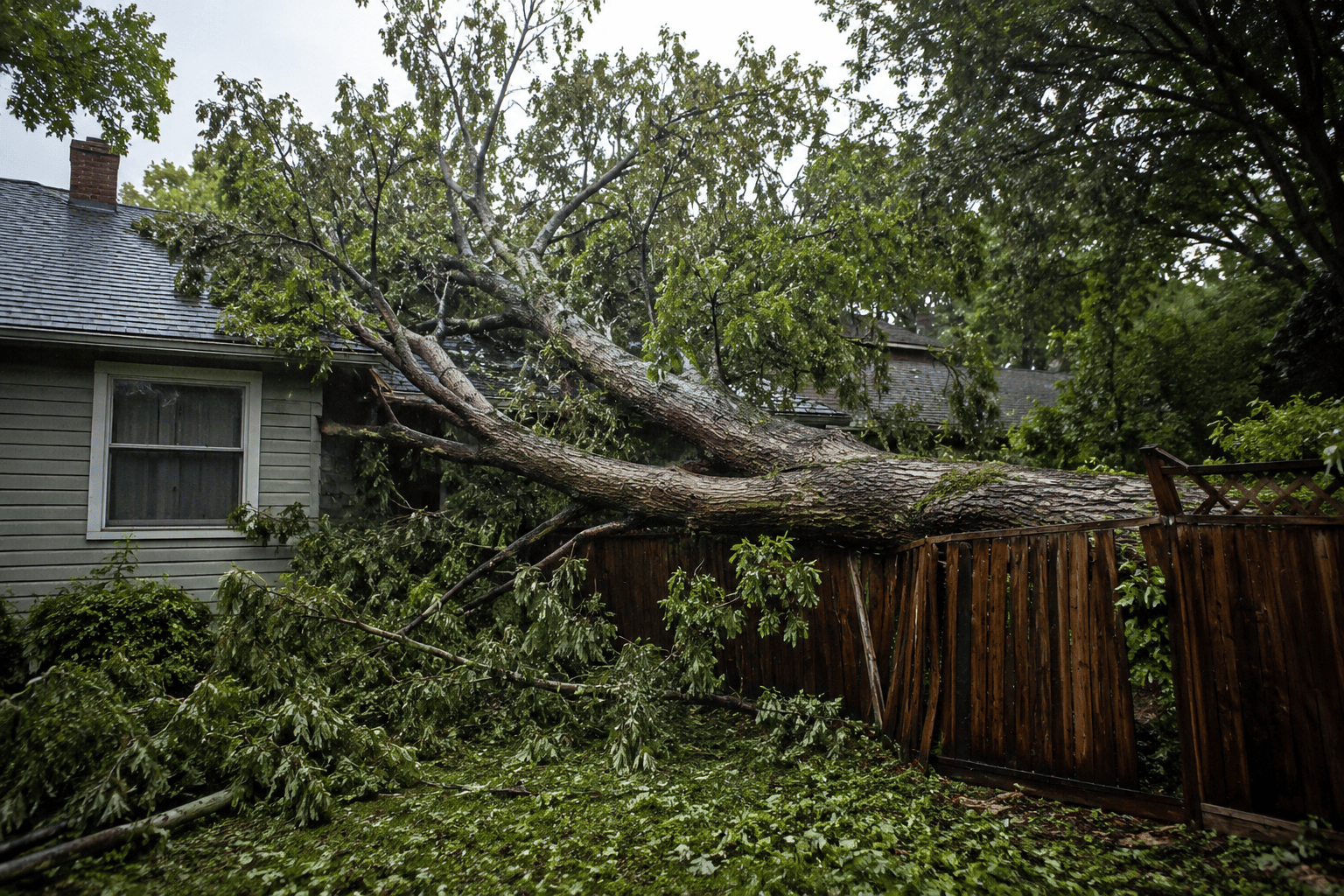
- Danger to people or property. A risk assessment shows the hazard cannot be reduced by pruning, cabling or other mitigation.
- Interference with structures or utilities. Roots or trunk are damaging a foundation, sewer lateral, driveway or utility line, and the alternatives are infeasible or inappropriate.
- Economic enjoyment of the property. The tree prevents reasonable use of the lot and alternative designs have been shown to be infeasible.
- Erosion and soil retention. How removal would affect the slope and drainage.
The first three are the ones our arborist documents most often. “It drops leaves” and “it blocks the afternoon sun” are not on the list. A tree that is lifting the driveway or sending roots into the lateral is – our posts on roots lifting a driveway and roots in the sewer line cover what that evidence looks like.
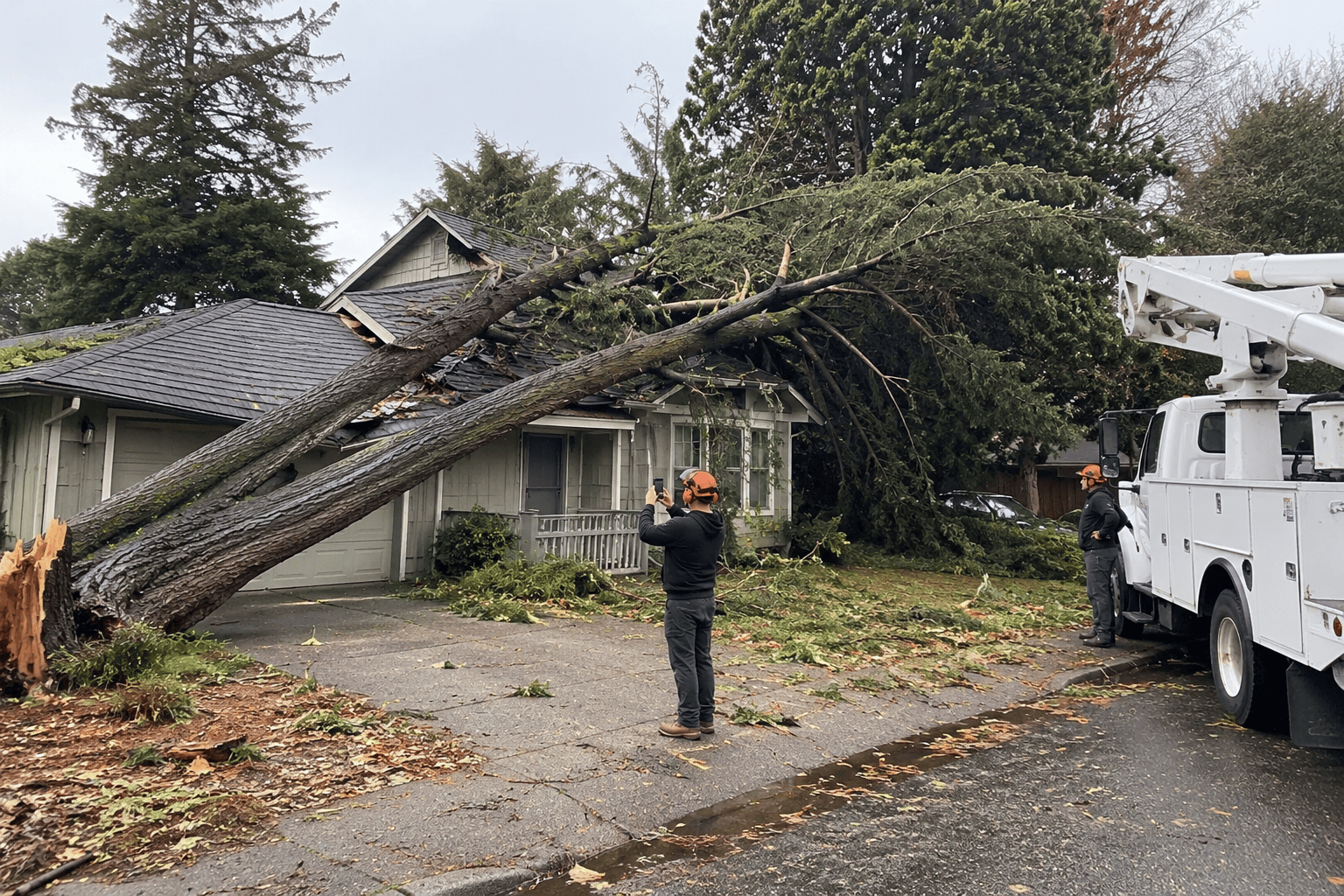
Dead and hazardous trees are handled differently in most cities, with a faster review or an emergency provision, but the paperwork still has to exist. Our separate guide on dead tree removal permits in San Mateo County walks through that path, including what to do when a tree fails overnight.
How to apply for a protected tree removal permit
The mechanics vary slightly by city, but the San Mateo process is typical of the Peninsula:
- Confirm the tree and the jurisdiction as described above. Photograph the tree from the street and from the yard.
- Get an arborist report if the reason is health or hazard. The city accepts reports from an ISA Certified Arborist. The report states species, the 54-inch measurement, condition, the specific defect or conflict, what mitigation was considered, and a recommendation. For hazard claims, a TRAQ (Tree Risk Assessment Qualification) rating carries real weight with reviewers because it follows the ISA standard method.
- File the tree removal or pruning permit application with the City of San Mateo Parks and Recreation Department (non-development permits) or with the planning file if the removal is part of a building project. The city charges a permit fee.
- Post the notice if required. Several cities, including San Mateo, require a notice on the property or to neighbors for a set period so objections can be filed.
- Wait for the decision. Plan on a few weeks for a routine private-property permit; longer if neighbors object or the tree is tied to a development application. Dead and hazardous trees are generally reviewed faster.
- Plant replacements as conditioned. Most permits carry a replacement condition – one or more new trees of a specified size, or an in-lieu fee. Keep the receipt; the city can ask for proof.
- Schedule the removal only after the permit is issued and keep a copy on site during the work.
For Palo Alto and Menlo Park, the city keeps its own list of approved or consulting arborists for certain applications, and Palo Alto asks for advance notice before maintenance work on protected trees. Atherton runs removals through its Heritage Tree Preservation Standards and Specifications. When we take on a permit project we confirm the current form, fee and notice period with the city on the day we file, because those change more often than the ordinance itself.
Fines for removing a protected tree without a permit
This is the part that makes the permit worth the wait. The published penalties in San Mateo County are large, and they stack: a fine or civil penalty, plus replacement planting, plus in several cities the appraised value of the tree you removed.
- City of San Mateo. Violations are subject to the penalties in Municipal Code Section 13.40.160, and the Administrative Guidelines state that a protected tree removed without a valid permit is to be replaced with a 48-inch box tree, with enhanced replanting conditions up to the value of the tree. The code also makes it unlawful to damage a protected tree in a way that compromises its health or structure.
- Unincorporated San Mateo County. The county’s Protected Tree Ordinance lists penalty fees starting at $1,000 for trees eligible for over-the-counter permits, $2,500 for a first protected tree, $3,750 for a second and $5,000 for each additional tree, doubled for large indigenous trees of 36 inches or more, plus an investigation fee of ten times the normal permit fee.
- Redwood City. $500 per tree for illegal pruning or removal, replacement planting equal to the appraised value of the original tree, and possible misdemeanor prosecution.
- Burlingame. A fine of up to $1,000 per violation plus restitution equal to the appraised value of the tree and the cost of replacement.
- Atherton. Removing a heritage tree in violation of the chapter requires payment of two times the appraised value of the tree; damaging one costs half the appraised value.
- Hillsborough. $150 per inch of trunk diameter or the ISA appraised value of the tree, whichever is greater.
“Appraised value” is the number that surprises people. A mature coast live oak or redwood appraised under the ISA Guide for Plant Appraisal can run well into five figures, and a two-times multiplier applies to that. Add the replacement trees and the cost of the removal itself, and an unpermitted job can cost many times what a permit and an arborist report would have. It also follows the property: cities record violations, and a buyer’s inspection or a later building permit can bring it back up.
The figures above are from each jurisdiction’s published ordinance or guidelines as of 08/26/2026. Cities update their fee and penalty schedules by resolution, so treat them as the order of magnitude, not a quote.
What protected tree work costs
Permit fees are set by each city and change with its fee schedule, so we do not publish them – the city charges a fee, and we tell you the current amount when we file. The tree work itself falls into the same ranges as any removal: small tree removal typically runs about $300-$600, and large or hazardous removals run $1,000-$3,000 or more depending on size, access and rigging. Every Precision Tree Care estimate includes removal, dumping and hauling, with no callbacks for extra charges. Stump grinding is discounted when bundled with the removal, and free wood chips are available on request.
An arborist report is billed separately from the removal, and the cost depends on how many trees are involved and whether a TRAQ risk assessment or a tree protection plan for construction is needed. Ask for it in your free estimate so the number is in writing before anything is filed.
Alternatives to removal that cities like to see
Reviewers approve removals more readily when the application shows that the alternatives were considered. Often the alternative is also the better outcome for the property:
- Crown reduction and thinning to bring a heavy oak off the roof or open a view without crossing the 25 percent line. Our crown reduction and thinning service is the usual first step on a heritage tree.
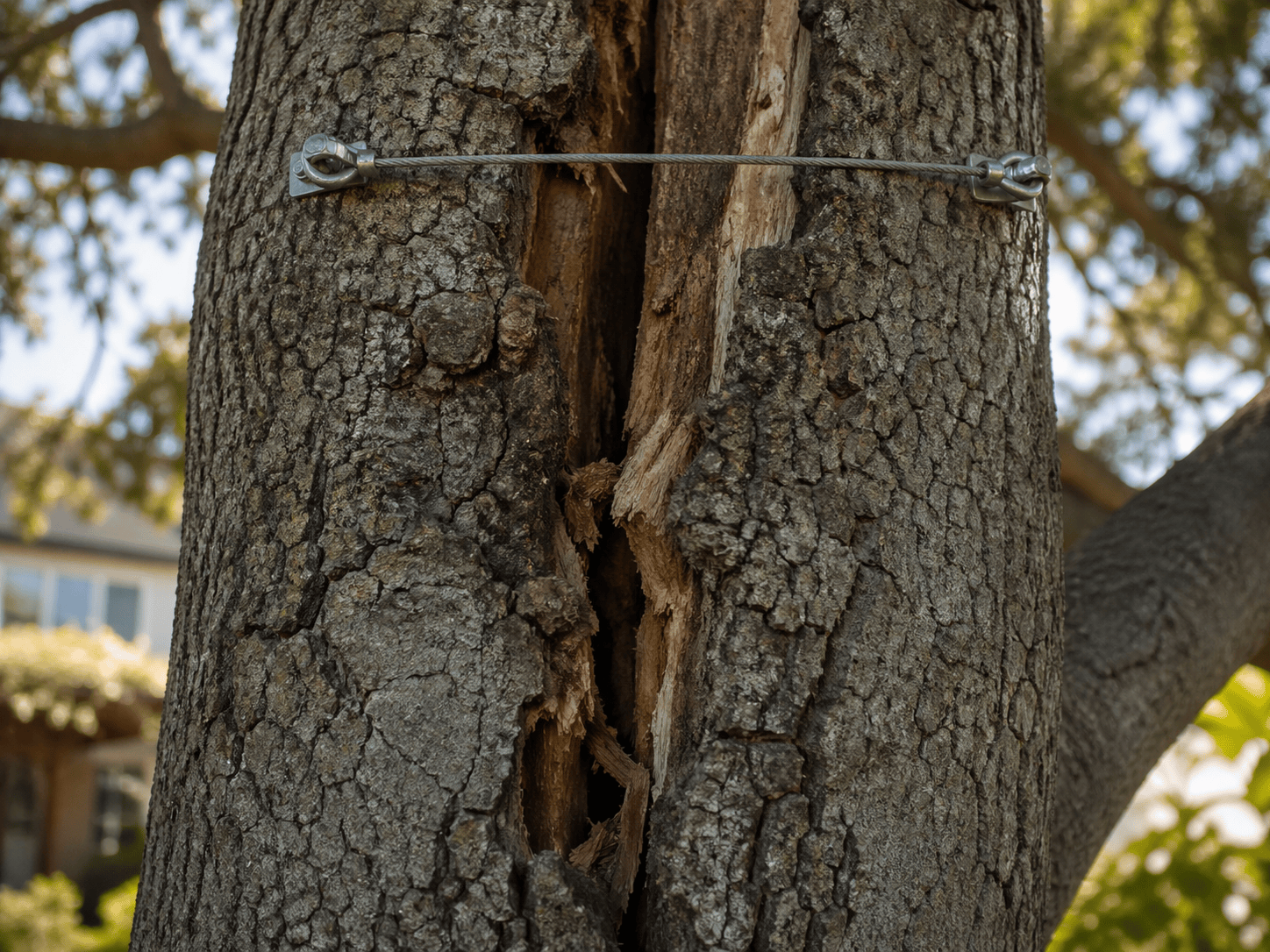
- Cabling and bracing for a tree with a split leader or a long lateral limb. Installed correctly, it satisfies the “danger to property” concern without losing the tree. See our post on whether to remove or brace a split tree.
- Root pruning and root barriers where a driveway or sidewalk is the issue, done under an arborist’s direction so the tree stays stable.
- Treatment for disease where the problem is a treatable condition rather than terminal decline. Sudden oak death is the exception in this county – see sudden oak death symptoms and what to do.
When none of those will work, the report says so, and that statement is exactly what the city needs to approve the permit.
How Precision Tree Care handles protected tree permits
We start with a site visit, not a phone estimate. Our arborist identifies the species, measures the trunk at 54 inches with the tape photographed in place, confirms which jurisdiction the parcel is in, and checks whether the tree is a street tree or tied to a prior planning approval. If the tree is protected and you want it removed for health or hazard reasons, we prepare the ISA arborist report the permit application needs, including a TRAQ risk rating where the case rests on hazard. If the reason is roots or structural conflict, we document the damage and the mitigation we ruled out.
Then we guide the application through the city – the form, the fee, the notice, the replacement condition – and schedule the work only after the permit is issued. On the day, a heritage oak over a house in Hillsborough or a redwood between two homes in Atherton is a challenging tree removal: technical climbing and rigging where a lift cannot reach, our 75 ft aerial lift where it can, and a chip truck and stump grinder sized to the job. We leave the property spotless – no debris, no mess, no worries – and we hand you the paperwork the city may ask for at closeout.
Precision Tree Care has served San Mateo County since 2005, with 40+ years of family expertise behind it. Our work is led by an ISA Certified Arborist (#WE-12520A), we hold California Contractors License #907593, and we carry full liability and workers’ compensation insurance – so a permit desk, an HOA or an insurer can rely on our documentation. Our team in San Mateo works across all 22 cities in the county.
Not sure whether your tree is protected?
Our ISA Certified Arborist will measure it, check your city’s ordinance and tell you whether a permit and a report are needed before any work is scheduled. Free estimates, no hidden fees – removal, dumping and hauling are included.
Frequently asked questions
What trees are protected in San Mateo?
In the City of San Mateo, protected trees are heritage trees (oaks 10 inches or more in trunk diameter, any other species 15 inches or more, measured 54 inches above grade), street trees in the public right-of-way, and trees designated as protected in an approved planning application. The rule comes from Municipal Code Chapter 13.40. Other cities in the county use different thresholds.
Do I need a permit to remove a tree in San Mateo County?
If the tree meets your city’s protected tree definition, yes. Thresholds range from 12 inches in diameter in Redwood City and the unincorporated county to 18 inches in Hillsborough, with lower limits for native oaks in San Mateo, Menlo Park, Atherton and Palo Alto. Trees below the threshold on private property generally do not need a permit, but confirm with your city first.
Do I need a permit to trim a protected tree?
In the City of San Mateo, a permit is required for major pruning of a heritage tree, defined as removing more than 25 percent of the crown or foliage, and for any pruning of a street tree. Light pruning of a heritage tree on private property does not need a permit. Menlo Park, Burlingame and Redwood City regulate heavy pruning too, so check your own city’s rule.
How much is the fine for cutting down a protected tree without a permit?
It depends on the city. The unincorporated county lists penalties from $1,000 to $5,000 per tree, doubled for large native trees. Redwood City charges $500 per tree plus a replacement equal to the tree’s appraised value. Atherton requires two times the appraised value. Burlingame fines up to $1,000 per violation plus restitution. San Mateo requires a 48-inch box replacement tree and applies the penalties in Section 13.40.160.
Can I remove a protected tree that is damaging my foundation or sewer line?
Often yes, with a permit. Interference with structures or utilities is one of the findings the City of San Mateo can use to approve removal, provided mitigation such as root pruning or a root barrier is shown to be infeasible. An arborist report documenting the damage and the alternatives considered is what makes that case to the city.
How long does a protected tree removal permit take in San Mateo?
Plan on a few weeks for a routine private-property permit once the application and arborist report are complete, longer if neighbors object during the notice period or the removal is part of a development application. Dead and hazardous trees are usually reviewed faster, and most cities have an emergency provision for a tree that has failed or is about to.
Do I need an arborist report for a protected tree permit?
For removals based on health, hazard or structural conflict, the City of San Mateo and most neighboring cities expect a written report from an ISA Certified Arborist stating the species, measurement, condition, the specific problem and the alternatives considered. Hazard cases are stronger with a TRAQ risk assessment. Some cities keep a list of approved arborists, so ask before you commission one.
Is a coast live oak protected in San Mateo County?
Almost always, once it reaches a modest size. Native oaks are protected at 10 inches in diameter in the City of San Mateo, Menlo Park and the unincorporated county, at 11.5 inches in Palo Alto, and at 15.2 inches in Atherton. Because oaks also have a narrow safe pruning window, have an arborist confirm the measurement and the timing before any work.