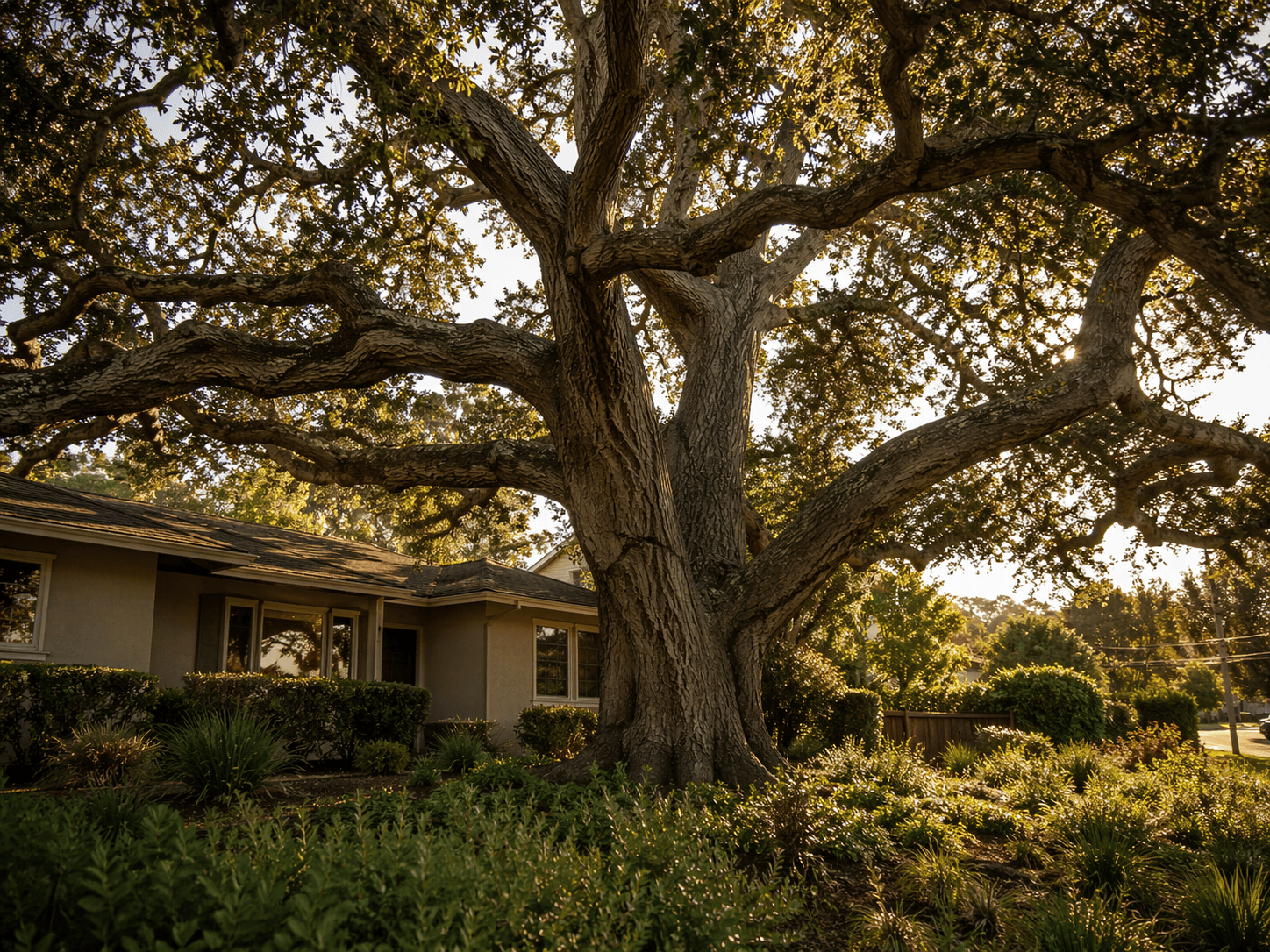


What homeowners should know about keeping trees healthy, safe, and under control — with practical advice for common Bay Area species.
Trimming vs. Pruning: What’s the Difference?
People use these words interchangeably, but they mean different things. Trimming is about shape and size — cutting back overgrowth, clearing pathways, opening up views. Pruning is about health and structure — removing dead wood, fixing weak branch unions, preventing future failures. In practice, most professional tree work involves both. A certified arborist assesses what your tree needs and combines both approaches in a single visit.
The distinction matters because technique matters. Every cut is a wound the tree has to seal. Cuts made in the wrong spot, at the wrong angle, or at the wrong time of year can introduce disease, trigger weak regrowth, or permanently compromise the tree’s structure. A general rule: never remove more than 25% of the canopy in a single session.
When to Trim Trees in the Bay Area
Timing depends on the species and what you’re trying to accomplish:
- Most deciduous trees — late fall through early spring, while dormant. Wounds heal faster and disease risk is lower.
- Oaks — only during the dry season (June–September). Pruning oaks in wet weather increases the risk of oak wilt, which is present in the Bay Area.
- Monterey pines — dry weather only. Pitch canker spreads through wet pruning wounds.
- Fruit trees — winter, to shape the canopy and improve next season’s yield.
- Dead or hazardous branches — any time of year. Don’t wait for the “right season” if a branch is a safety risk.
For most mature trees, professional trimming every 3–5 years is enough. Fast growers or trees near structures may need annual attention.
What Good Trimming Actually Does
Keeps trees healthy
Dead wood is an entry point for insects and fungal infections. Removing it before problems spread protects the whole tree. Thinning the canopy also improves air circulation — important in the Bay Area’s damp, mild climate where anthracnose, powdery mildew, and leaf spot thrive in stagnant air.
Prevents storm damage
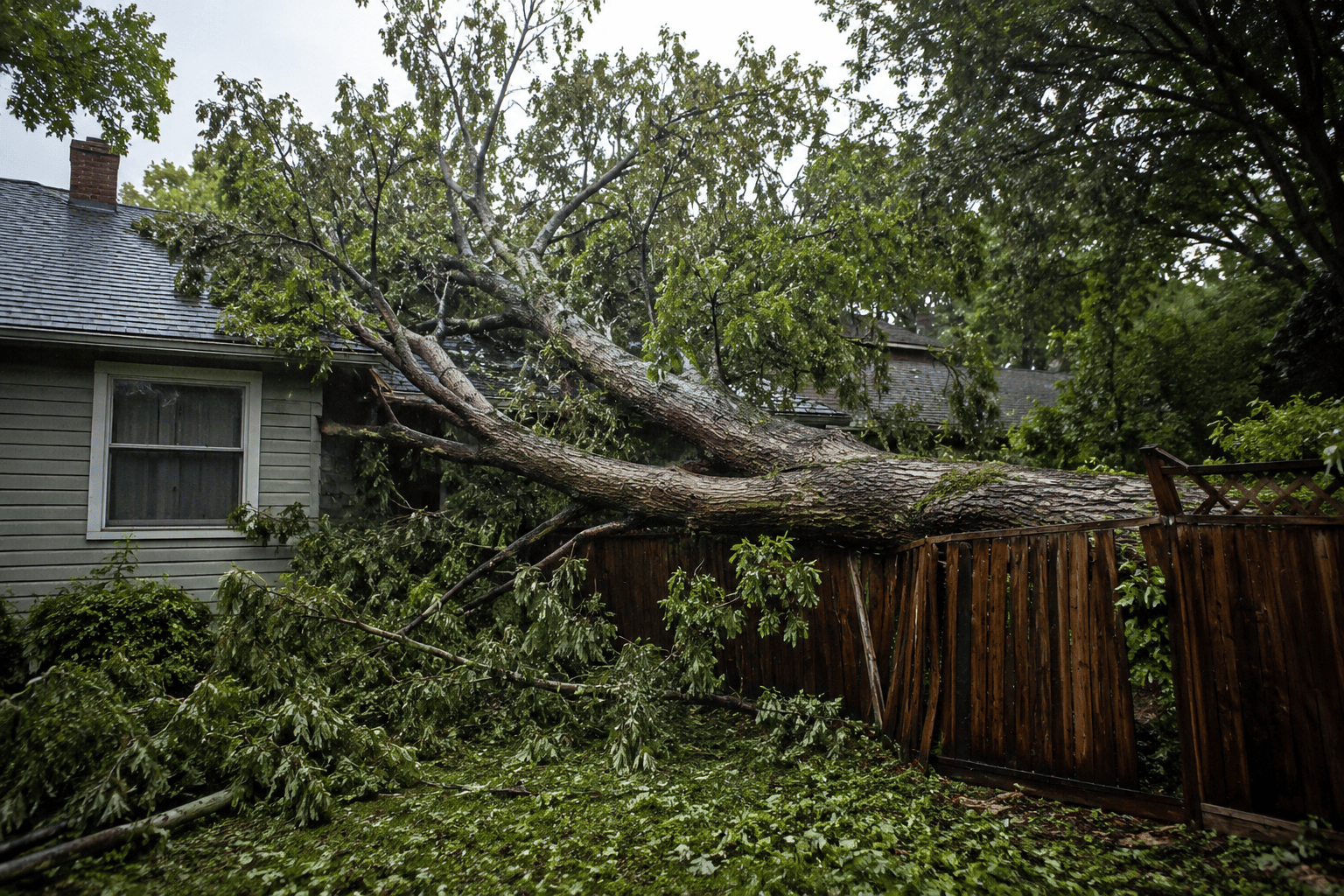
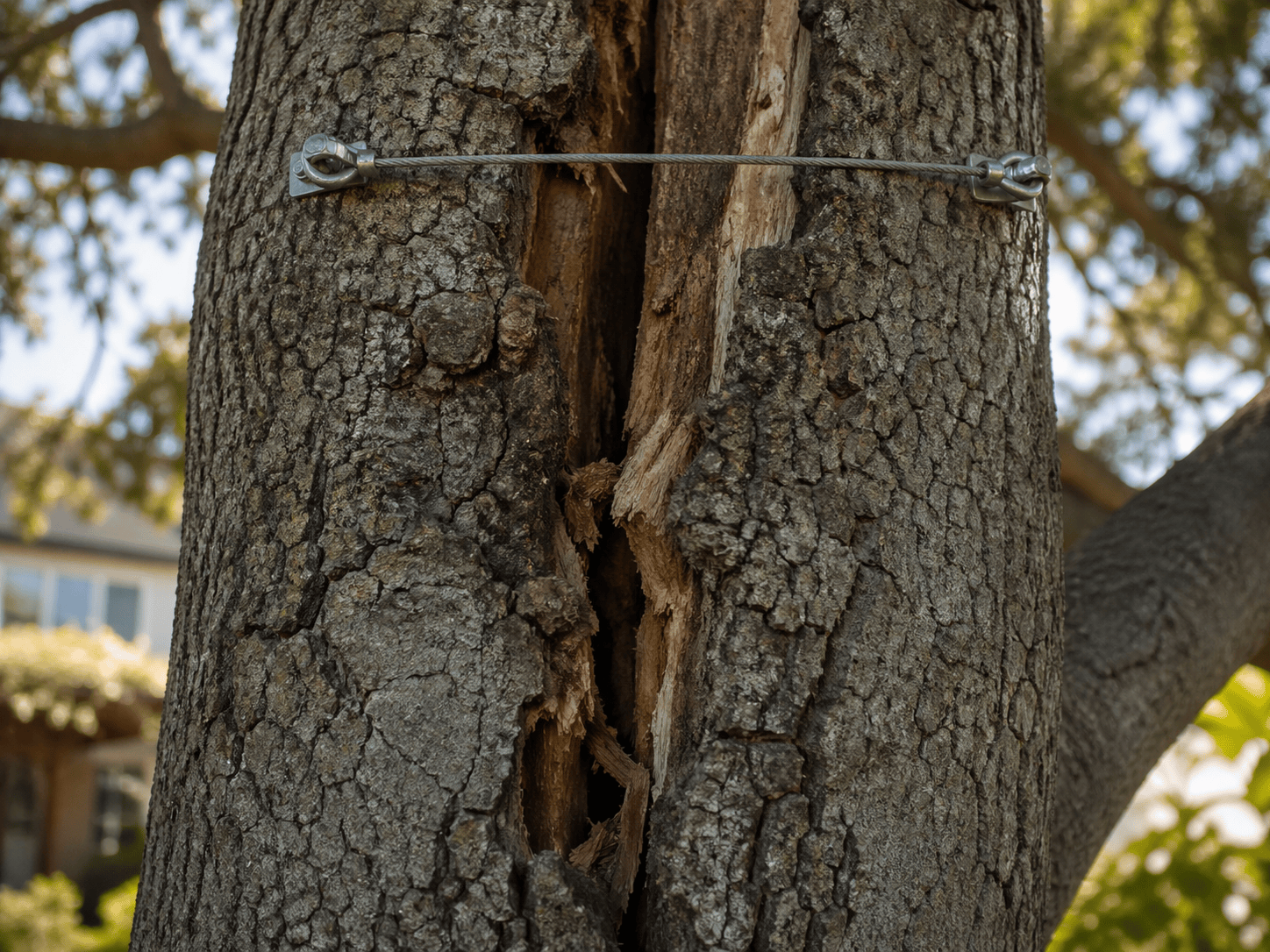
A dense, unthinned canopy acts like a sail in high winds. Crown thinning lets wind pass through instead of pushing against the tree, dramatically reducing the chance of branch failure or blowover during winter storms. Regular trimming also catches structural problems — weak branch unions, cracks, excessive end-weight — before they turn into emergencies.
Protects your property
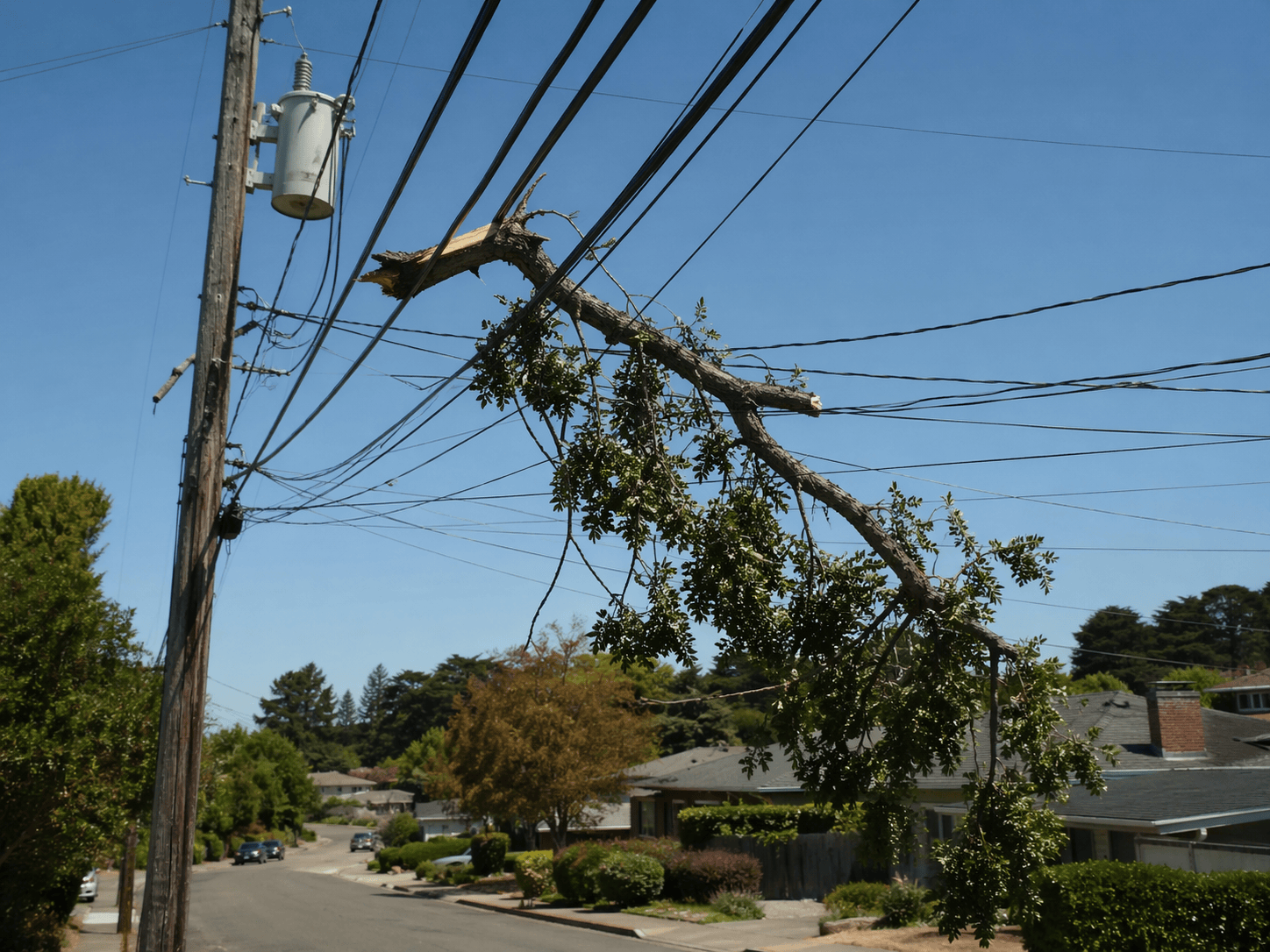
Branches that overhang roofs, driveways, and power lines are liabilities. A limb that’s fine in summer may fail under the weight of rain and wind in January. Proactive trimming removes these risks before they cause damage.
Improves light and views
Overgrown canopies can kill lawns, shade out gardens, and block views that add property value. Crown thinning lets dappled sunlight reach the ground without reducing the tree’s overall size. View clearing — selectively removing branches that block sightlines to the bay, skyline, or hills — is one of the most common requests we get from Bay Area homeowners.
Common Types of Tree Trimming Work
You don’t need to know all of these — your arborist will recommend the right approach. But it helps to understand what’s being proposed:
- Crown thinning — selectively removing branches throughout the canopy to reduce density. Improves airflow, light, and wind resistance without changing the tree’s size or shape. The most common service for mature trees.
- Crown reduction — reducing the overall size of the canopy by cutting back to lateral branches. Used when a tree has outgrown its space or threatens structures. Should never exceed 25% in one session.
- Structural pruning — done on young trees (first 10–15 years) to establish a single leader, strong branch spacing, and good architecture. Prevents expensive corrective work later.
- Deadwood removal — exactly what it sounds like. Essential for any mature tree, especially oaks, redwoods, and pines that accumulate dead branches naturally.
- Hazard limb removal — targeting specific branches that pose immediate risk. Quick, focused, and often more affordable than full-canopy work.
A Note on Palm Trees
Palms are fundamentally different from other trees. They grow from a single point at the top of the trunk — damage that point and the tree dies. They can’t seal wounds the way hardwoods do. And they’re often 20–60 feet tall, making any work on them inherently dangerous.
The biggest mistake with palms is over-trimming. Removing green fronds reduces the tree’s ability to photosynthesize and creates the “hurricane cut” look that actually weakens the palm. Only fully brown, hanging fronds should be removed, along with heavy seed clusters. Canary Island Date Palms, Mexican Fan Palms, and Queen Palms — the most common Bay Area species — each have different growth rates and trimming needs. This is specialist work.
Why Bad Trimming Is Worse Than No Trimming
The most damaging thing you can do to a tree is top it — cutting main branches back to stubs. Topped trees respond with dense, weakly attached water sprouts that are far more dangerous than the original branches. The tree’s structure is permanently compromised, it becomes more vulnerable to disease, and it often dies within a few years. If someone offers to “top” your trees, find a different company.
Other common mistakes: flush cuts that remove the branch collar (the tree’s natural defense zone), stub cuts that leave dead wood to rot back into the trunk, and removing too much canopy at once. Trees that receive bad cuts often decline slowly over several years and eventually need to be removed entirely — costing far more than proper trimming would have.
This is why credentials matter. An ISA-certified arborist knows where to cut, how much to remove, and what each species needs. A guy with a truck and a chainsaw does not.
About Precision Tree Care Inc.
We’re a locally owned, full-service tree company based in Pacifica, serving San Mateo County, San Francisco, and the Mid-Peninsula. Our crew includes ISA-certified arborists with over 40 years of combined experience. Licensed, insured, and bonded.
How we work
Every job starts with a free on-site consultation. We assess your trees, explain what we recommend and why, and provide a written estimate with all costs included — no surprise charges for hauling or dump fees. After the work, we leave your property clean.
Trimming services we provide
| Service | Best for |
|---|---|
| Crown thinning & reduction | Mature trees, storm prep, light improvement |
| Structural pruning | Young trees, long-term investment |
| Deadwood & hazard limb removal | Safety, maintenance, storm prevention |
| View clearing | Restoring property views without removing trees |
| Palm trimming | Frond removal, seed cluster cleanup |
| Fine pruning | Ornamentals, Japanese maples, specimen trees |
Get a Free Estimate
Need trimming, have a question about a specific tree, or want a professional opinion on what your property needs? Call or text any time.