

View Clearing & Fine Pruning
Call Us (650) 355-1277
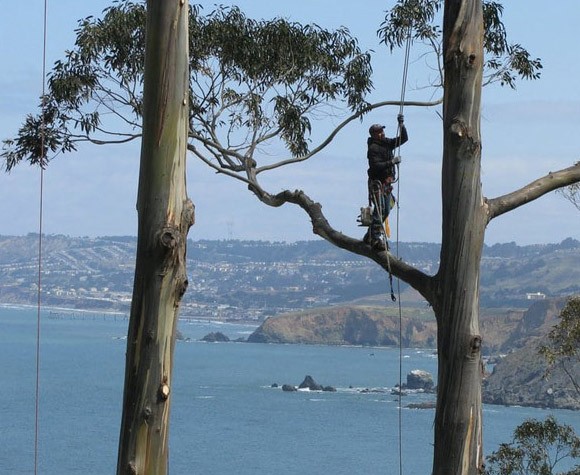
View Clearing & Fine Pruning
At Precision Tree Care Inc., we provide professional view clearing and fine pruning services in Pacifica, San Mateo County, and the Mid-Peninsula, helping homeowners and property managers enhance the beauty, safety, and value of their landscapes. Our view clearing service is designed to restore and maximize scenic vistas, whether it’s opening up a stunning mountain view, revealing a hidden lakefront, or letting more natural sunlight into your home. Using strategic tree trimming, pruning, and vegetation removal, our expert arborists clear overgrown branches while protecting tree health and maintaining the natural balance of your property. Benefits include improved aesthetics, increased property value, better sunlight exposure, and enhanced safety.
Our fine pruning service focuses on precision care to improve tree health, structure, and appearance. Unlike basic trimming, fine pruning is a detail-oriented process where our ISA-trained arborists selectively remove dead or dying branches, diseased limbs, crossing branches, and growth that disrupts the tree’s natural form. This promotes healthy growth, reduces risk of damage, and enhances the beauty of your landscape.
At Precision Tree Care Inc., we pride ourselves on delivering expert tree care with safety, skill, and a commitment to customer satisfaction. Whether you need to clear your view or perfect the shape of your trees, we offer tailored solutions to bring out the best in your property.
Frequently Asked Questions
This comes up regularly across the Peninsula’s hillside neighborhoods, and the answer is nuanced. In most cases, branches that extend over your property line can be trimmed back to that line – but local ordinances vary, and some cities require neighbor consent or permits for protected species regardless of where the branches extend. We can assess what is legally permissible for your specific address, perform the work within your rights, and provide arborist documentation if the situation involves any dispute.
One caution on self-help: California law lets you trim to the property line, but not in a way that destabilizes or kills the tree – that can create liability for you. A written agreement with the neighbor before work starts is the cleanest path, and view work is often worth proposing as a shared cost.
It depends on the species, size, and jurisdiction. Many Peninsula cities protect certain tree species and require permits before significant pruning or removal – Menlo Park, Atherton, Hillsborough, and Burlingame each have their own requirements. Our ISA Certified Arborist is familiar with the rules across all the communities we serve and will advise on what approvals are needed before any work is planned. If an arborist report is required to support a permit application, we provide that as part of our service.
Quick self-check before you call: measure the trunk at chest height. Under about 9 to 10 inches in diameter, most local cities do not regulate the work; above that, verify first – fines for unpermitted work on protected trees run into the thousands.
For most species on the Peninsula, late fall through early spring – the dormant season – is ideal for heavy pruning. It minimizes stress, reduces disease exposure through fresh cuts, and lets the tree channel its energy into healthy spring growth. That said, dead wood, hazardous branches, and fire prevention clearance can and should be done any time of year – waiting until the “right season” is not worth the risk when a branch is a liability.
The big local exception: native California oaks prefer the dry season (July through October) – wet-season pruning invites the pathogen behind sudden oak death. If your yard mixes oaks and ornamentals, the honest schedule is two visits, not one.
View clearing is the selective trimming or removal of trees and vegetation to restore or enhance scenic views from your home or business. In Pacifica and along the San Mateo County coast, many property owners choose view clearing to open up stunning ocean, coastal canyon, or valley views while maintaining healthy, well-managed landscapes. In a region where a view can add significant property value, keeping it open is both a quality-of-life and financial investment.
The craft is in what stays, not what goes: a good view corridor is framed through selective limb removal and crown windows, so from inside the house you see ocean through healthy green edges rather than a bare gap. Done this way, the trees keep their wind resistance and the view looks intentional, not cut.
Two ways. Fine pruning removes the weak, crossing, or structurally compromised branches that fail during high-wind periods – proactively taking out the branch before it becomes the problem. Crown reduction and thinning lower the crown’s weight and wind resistance, reducing the dynamic load on branch attachments during the wind events that move through San Mateo County from late fall through early spring – especially on exposed hillside lots in Pacifica, Montara, and Half Moon Bay.
If you have one budget slot before winter, start with the largest tree with limbs over a roof or driveway – reducing that tree’s wind sail buys more risk reduction per dollar than lightly trimming everything else on the lot. A branch removed during scheduled pruning costs a fraction of the roof repair and emergency callout it causes when it fails in January wind.
No – proper pruning by a certified arborist benefits the tree, whether it is fine pruning, crown reduction, thinning, or view clearing. Cuts made correctly at the branch collar seal cleanly and efficiently. What damages trees is incorrect technique: topping, flush cuts that remove the collar, stubs left too long, or removing more than 25% of live canopy in a single visit. We follow ANSI A300 standards on every job and never top trees.
Your protection as a client is specificity: ask how much live canopy will be removed (the right answer is a percentage, capped around 25) and where the cuts land (at lateral branches, not arbitrary heights). After the job, cuts should sit just outside the slightly swollen branch collar and the canopy should look thinner but natural – never sheared, stubbed, or hollowed out.
Fine pruning is the precise, cut-by-cut trimming of small branches to improve a tree’s shape, structure, health, and safety – work done with hand tools and climbing, not hedge shears and poles. It improves sunlight penetration and air circulation without stressing the tree, which is what makes it fundamentally different from routine trimming for clearance.
Every cut has a reason: we remove dead and dying branches, crossing or rubbing limbs, water sprouts and suckers, and weak attachments that present long-term failure risk. The green, structurally sound canopy stays – a fine-pruned tree looks healthier and lighter, not obviously cut.
It pays back most visibly on Japanese maples, coast live oaks, fruit trees, and flowering ornamentals – and on coastal species in Pacifica and Half Moon Bay, where strong structure is what stands up to persistent wind.
Most trees benefit from fine pruning or crown thinning every 2 to 3 years, depending on species and growth rate. Fast growers common on the Peninsula – eucalyptus, acacia, Monterey cypress – may need attention every year or two, especially for view clearing; slow-growing oaks and mature ornamentals can go every third year. Crown reduction is not a routine item: it is a one-time structural decision made when a tree has genuinely outgrown its space.
Two calendar anchors: young trees (under 15 years) deserve a structural look every 2 years while their architecture is forming, and any tree that dropped a significant limb deserves a professional look that same season – single failures often reveal a correctable pattern.
Call Us! (650) 355-1277






Our Service Areas
Atherton, Belmont, Brisbane, Burlingame, Colma, Daly City, El Granada, Foster City, Half Moon Bay, Hillsborough, La Honda, Menlo Park, Millbrae, Montara, Pacifica, Pescadero, Redwood City, San Bruno, San Carlos, San Francisco, San Mateo, and South San Francisco